In the rapidly advancing world of artificial intelligence (AI) and high-performance computing (HPC), the need for faster, more efficient data transmission has never been more pressing. As AI models scale to handle unprecedented amounts of data, the infrastructure supporting these models must evolve accordingly. Optical Circuit Switches (OCS) are at the forefront of this transformation, offering an innovative solution for improving data flow in AI clusters and data centers, often integrated with or complementing intelligent AI network switch technology. By providing direct, high-bandwidth, low-latency optical connections, OCS is poised to lead the way in the shift toward all-optical data centers.
Understanding Optical Circuit Switches (OCS)
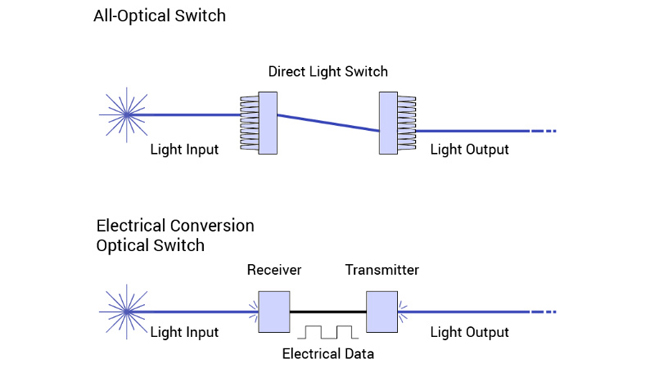
Optical Circuit Switches (OCS) are a type of network switch that allows optical signals to be transmitted directly between points without the need for electrical conversion. Unlike traditional switches that handle data packets by processing and redirecting them, OCS creates a dedicated optical path, allowing data to move at the speed of light with minimal delay and energy consumption. In a world where large language models and complex AI workloads demand ever-increasing data throughput, OCS is becoming a critical component for AI-powered data centers.
The Rise of AI and the Demand for High-Speed Connectivity
AI workloads, especially those used for deep learning and natural language processing, require enormous amounts of data to be transferred between thousands of processors and storage units within data centers. These processors, often Graphics Processing Units (GPUs), need to communicate efficiently in a high-performance cluster environment to process vast datasets in parallel. As AI models grow in complexity, the communication demands of these systems grow exponentially.
Traditional copper-based networking systems struggle to keep pace with the bandwidth and latency requirements of AI workloads. In contrast, fiber-optic technology is able to transmit significantly more data over longer distances with far less signal degradation. Fiber-optic connections are not only faster but also offer lower latency, making them ideal for high-speed computing environments like AI clusters.
OCS: A Game Changer for AI Data Centers
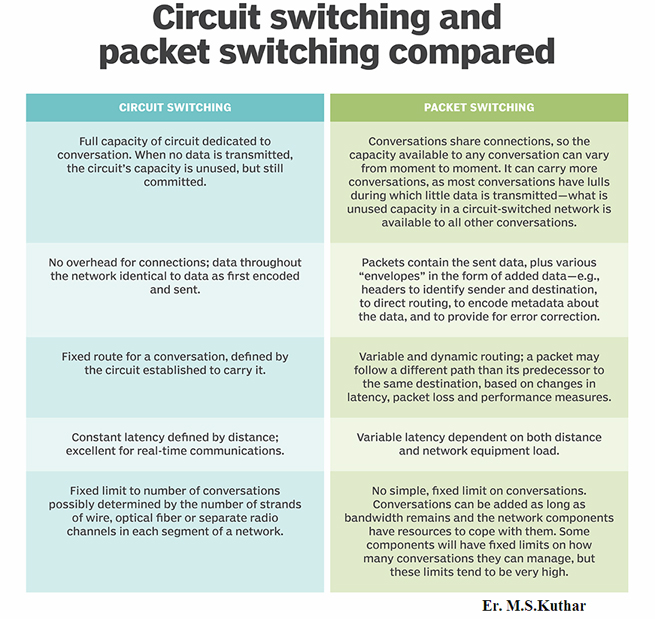
The key to OCS's effectiveness lies in its ability to bypass the bottlenecks introduced by traditional electronic switches. A traditional Electronic Packet Switch (EPS) can be thought of as a post office sorting system: data packets (like letters) must be read, sorted, and then sent to their destination, a process that introduces delays and consumes power. This system also requires optical-electrical-optical (O-E-O) conversion, further adding to latency and energy consumption.
In contrast, OCS is like an automated railway shunting yard: the system reconfigures the physical tracks to provide a direct, uninterrupted optical path between the data source and the destination. This approach eliminates the need for packet-by-packet decision-making and the energy costs associated with optical-electrical-optical conversion. Data can be transmitted at the speed of light along dedicated physical lines, resulting in faster and more energy-efficient communication.
The Software-Defined Role of OCS in AI Clusters
While the OCS hardware itself is designed for low-latency, high-bandwidth transmission, the software layer that controls these switches plays a crucial role in optimizing performance for AI workloads. AI training often involves long, stable communication patterns, with data being transferred over the same optical paths for hours or even days at a time. In these cases, OCS reconfiguration is infrequent, and the system remains stable for extended periods.
To manage this, OCS operates in conjunction with Software-Defined Networking (SDN). In an SDN system, a central controller calculates the "circuit scheduling scheme" and instructs the OCS to recalibrate its internal settings, adjusting the optical paths when necessary. While the reconfiguration process is slower than traditional packet switching, it occurs in milliseconds, making it well-suited for AI applications where minimal disruption is required.
Types of Optical Circuit Switch Technologies
There are several different approaches to implementing Optical Circuit Switching, each with its own set of strengths. The three primary technologies used in OCS systems today are:
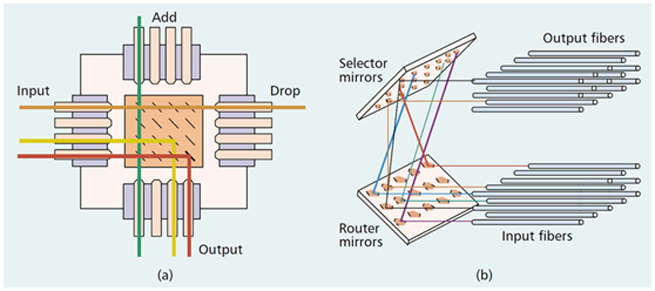
l MEMS Micromirrors: Micro-electromechanical systems (MEMS) use tiny mirrors to reflect light onto specific paths. These mirrors can quickly adjust the light’s direction, enabling dynamic reconfiguration of optical paths.
l Digital Liquid Crystals (LCoS/DMD): Liquid Crystal on Silicon (LCoS) and Digital Micromirror Devices (DMD) use liquid crystals or micro mirrors to modulate light signals. These devices offer precise control over the light’s transmission, making them ideal for high-performance applications.
l Piezoelectric Ceramics: Piezoelectric actuators use electrical fields to induce mechanical motion, controlling the movement of mirrors or lenses to steer light along desired paths. This technology is typically used for free-space optical switching.
These technologies can be combined with a range of passive components, such as lenses, waveplates, and couplers, as well as active components, including MEMS drivers, actuators, and optical sensors.
The Future of All-Optical Data Centers
As AI models continue to grow in complexity and scale, the need for faster, more efficient data transmission systems will only increase. Optical Circuit Switching is poised to play a pivotal role in the development of all-optical data centers—where optical signals are used for every stage of data transmission, from storage to processing. In these next-generation data centers, OCS will enable unprecedented levels of performance, with ultra-low latency and massive data throughput, empowering AI models to run faster and more efficiently than ever before.
In summary, Optical Circuit Switches represent a groundbreaking technology that will revolutionize the infrastructure supporting AI and HPC workloads. By enabling high-speed, low-latency communication without the energy and delay costs of traditional electronic packet switches, OCS is perfectly suited for the demands of modern AI data centers. As AI continues to evolve and scale, the role of OCS will only become more critical in supporting the complex, data-heavy applications of the future.
By Lanaotek
Lanaotek specializes in translating cutting-edge optical and Ethernet transmission technologies into clear, valuable insights that help our customers stay ahead in a fast-evolving digital world.
By turning complex technical concepts into practical, business-driven content, we aim to empower decision-makers with the knowledge they need to make confident, future-ready choices.
 EN
EN
 fr
fr  es
es  ru
ru  pt
pt  ar
ar  de
de 
 Internet Data Center
 FAQs
FAQs Industry News
 About Us
 Data Center Switch
  Enterprise Switch
  Industrial Switch
  Access Switch
  Integrated Network
  Optical Module & Cable




 Call us on:
  Email Us:
  2106B, #3D, Cloud Park Phase 1, Bantian, Longgang, Shenzhen, 518129, P.R.C.