The Unstoppable Demand for AI Processing Power
Artificial intelligence (AI) is transforming industries across the globe, from healthcare and finance to manufacturing and entertainment. But with AI's rapid evolution comes an insatiable demand for computing power. In fact, this demand doubles approximately every 100 days, creating a seismic shift in how we build and maintain data centers. As AI technologies become increasingly sophisticated, the infrastructure supporting them must scale accordingly to meet the growing needs for processing power, storage, and speed.
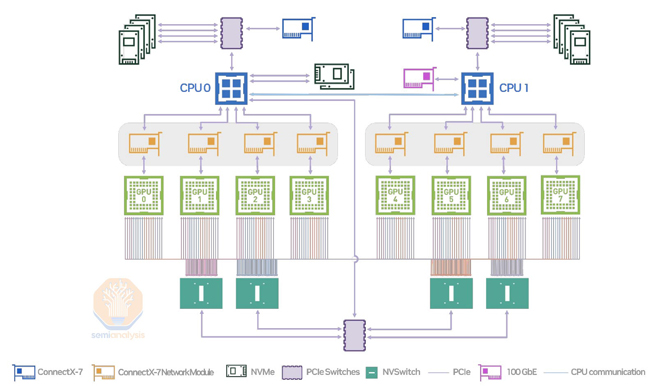
Data centers are the backbone of AI innovation. But the sheer scale and complexity of these centers present significant challenges. From cutting-edge chips and GPUs to advanced software systems and network components, every element of the data center infrastructure must be optimized to ensure smooth, uninterrupted service. And, as AI continues to expand, the stakes for service providers have never been higher.
The AI Infrastructure Challenge: Why Data Centers Matter
At the heart of every AI system lies a massive, interconnected web of hardware and software that performs complex computations. Training large language models (LLMs) and supporting generative AI applications require an immense amount of computational power, far beyond what traditional computing systems can handle. As AI applications grow more powerful, the need for advanced infrastructure intensifies.
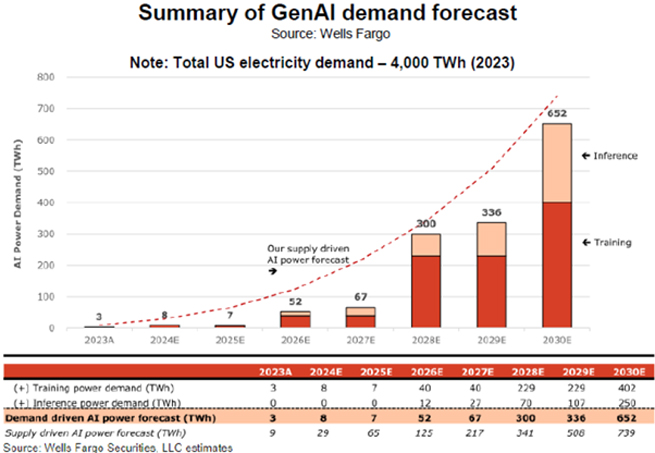
Take, for example, Sam Altman’s remarks on OpenAI’s struggles with a "lack of GPUs" as the company rolls out its latest models. Additionally, Goldman Sachs forecasts that AI will drive a 165% increase in data center electricity consumption by 2030. This puts infrastructure at the forefront of the AI revolution, with companies scrambling to build scalable, energy-efficient data centers capable of supporting AI's next iterations.
Potholes in the Path: The Scaling Dilemma
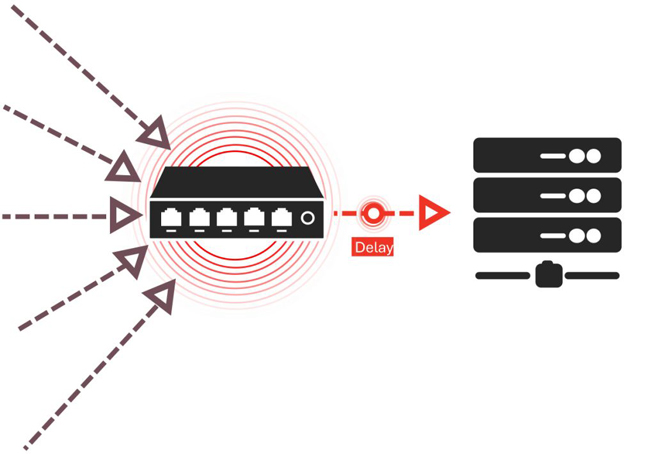
Scaling AI infrastructure is no easy feat. AI workloads place unprecedented demands on data centers, requiring them to deliver not only higher processing power but also faster memory and bandwidth, as well as more efficient cooling solutions. Distributed AI clusters—used to distribute tasks across GPUs—are particularly susceptible to performance bottlenecks due to tail latency (the lag introduced by the slowest components in a system). If these bottlenecks are not addressed, even the most advanced hardware will struggle to meet AI's real-time processing needs.
Simply meeting industry standards is no longer enough. Data center components must be rigorously tested, both at the individual level and at the network layer, to ensure they can handle the immense processing and data transfer loads. For instance, a transceiver that meets industry standards might fail under real-world conditions if it hasn't been properly tested for network protocol and forward error correction.
The Role of Testing: Ensuring AI Infrastructure Reliability
To scale AI infrastructure efficiently, rigorous testing is critical. By using system-level simulators that replicate the complexities of AI workloads, service providers can validate, optimize, and improve performance across all components of the data center. This includes evaluating everything from chips and servers to networking components and software. Comprehensive testing helps identify inefficiencies, optimize resource allocation, and ensure that the system remains robust even under peak loads.
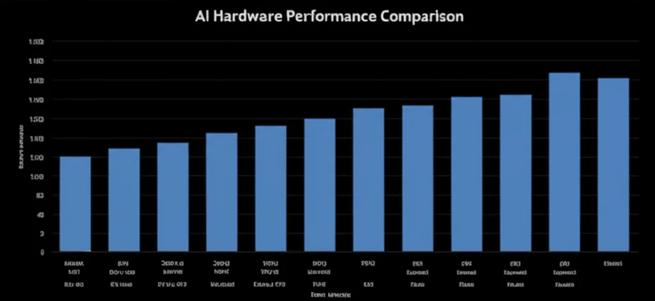
1. Component Performance: AI demands specialized hardware that can deliver extreme processing power. Dedicated chips, such as NVIDIA’s latest superchip, deliver up to 30 times the performance of conventional processors while reducing energy consumption by 25 times. But these hardware advancements require intensive testing to ensure that the system can handle peak loads and deliver consistent performance across all components.
2. Networking and Bandwidth: The interconnect architecture of a data center plays a vital role in AI performance. Network validation helps prevent bottlenecks by ensuring that the network infrastructure supports the high-speed, low-latency demands of AI applications. This includes assessing the bandwidth capabilities of fiber connections, optimizing memory architectures, and testing storage systems to guarantee quick data access.
3. Real-World Workloads and Dynamic Resource Allocation: AI workloads are dynamic and often unpredictable, requiring a flexible and efficient architecture that can handle fluctuating demands. Stress testing and benchmarking under real-world conditions are essential to identifying potential problems, such as tail latency, which could hinder performance. Additionally, the ability to dynamically allocate resources—such as memory and processing power—ensures that data centers can scale in real-time to meet the evolving demands of AI workloads.
Advancing Hardware and Software: Achieving Peak Performance
As AI workloads grow in complexity, the infrastructure supporting them must evolve. Dedicated hardware and intelligent software are key to delivering the performance and efficiency required by next-generation AI systems.
Dedicated AI Hardware: In addition to superchips, AI workloads require high-performance memory modules, network inference cards, and optimized switches. Each of these components must be evaluated in isolation and as part of the broader system to ensure that the entire network can handle the peak demands of AI applications.
Software and Intelligent Management: Beyond hardware, software optimization plays a crucial role in AI infrastructure. Advanced algorithms for dynamic resource allocation, autoscaling, and load balancing are essential for maximizing efficiency. Simulation and modeling tools can help data center operators benchmark network architecture and performance to ensure that the system can dynamically adjust to varying workloads.
Reliability and Optimization: The Path Forward
As AI continues to drive exponential growth in computing needs, data centers must evolve rapidly to keep up. The systems and components powering AI infrastructure must be rigorously tested to identify inefficiencies, optimize performance, and ensure long-term reliability.
Service providers that can integrate comprehensive testing, validation, and optimization techniques will be better positioned to support AI’s future growth. This includes stress testing hardware, fine-tuning network architecture, and dynamically managing resources based on real-time demand. With careful attention to these factors, data centers can scale efficiently, meet performance targets, and remain resilient as AI continues to revolutionize industries worldwide.
By Lanaotek
Lanaotek specializes in translating cutting-edge optical and Ethernet transmission technologies into clear, valuable insights that help our customers stay ahead in a fast-evolving digital world.
By turning complex technical concepts into practical, business-driven content, we aim to empower decision-makers with the knowledge they need to make confident, future-ready choices.
 EN
EN
 fr
fr  es
es  ru
ru  pt
pt  ar
ar  de
de 
 Internet Data Center
 FAQs
FAQs Industry News
 About Us
 Data Center Switch
  Enterprise Switch
  Industrial Switch
  Access Switch
  Integrated Network
  Optical Module & Cable


 Call us on:
  Email Us:
  2106B, #3D, Cloud Park Phase 1, Bantian, Longgang, Shenzhen, 518129, P.R.C.