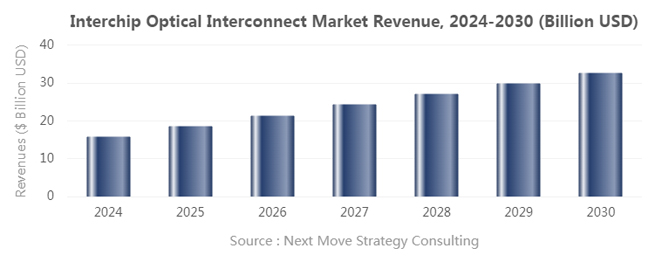
As the world enters the era of artificial intelligence (AI) and data-driven transformation, optical communication technologies are set to undergo a revolution. A recent report by McKinsey & Company predicts that by 2029, 800Gbps optical transceivers will dominate the optical networking market, accounting for approximately 70% of the global market share. However, this remarkable growth will face significant challenges, including supply chain bottlenecks and a rapidly increasing demand for high-speed data transmission. The report highlights key trends and underlying factors that will shape the future of optical transceivers, offering a glimpse into the next wave of optical networking technologies.
The Supply Chain Crisis: A Limiting Factor for Growth
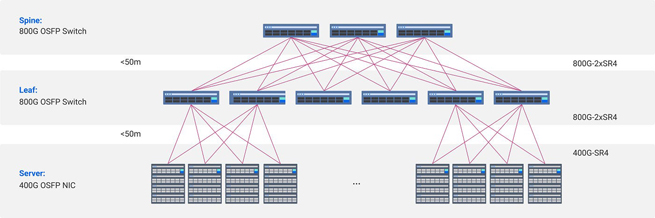
According to McKinsey’s report, one of the primary obstacles hindering the growth of high-speed optical networks is a critical shortage of optical transceivers. Despite growing demand for GPUs in AI computing, it is optical transceiver shortages that will pose the largest bottleneck in the deployment of 800Gbps and 1.6Tbps networks by the end of the decade. As optical networks become increasingly essential to support AI workloads and hyperscale computing, the demand for optical modules will outpace supply.
By 2027, McKinsey predicts the production capacity for 800Gbps optical transceivers will fall 40% to 60% short of market demand. Moreover, the supply gap for 1.6Tbps transceivers may also widen, reaching 30% to 40% by 2029. This looming shortage presents a significant challenge for network operators, OEMs, and data center operators looking to expand their infrastructure to meet AI-driven demands for faster, lower-latency interconnects.
Surge in Demand Driven by Hyperscale AI Computing
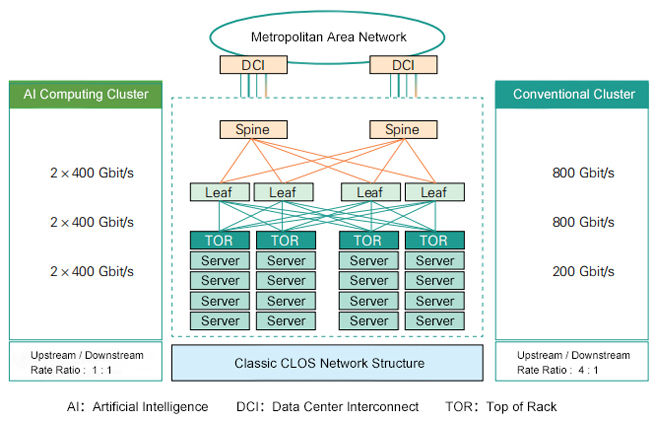
So, what’s driving this unprecedented demand for optical transceivers? The answer lies in the rapid adoption of AI-powered hyperscale computing. As enterprises deploy more AI applications, the need for high-performance interconnects to move data between data centers becomes crucial. McKinsey highlights that by 2029, hyperscale enterprises will move 87% of their optical transceivers to speeds of 800Gbps or higher, with 1.6Tbps products comprising over 40% of that demand.
In parallel, the metropolitan area network (MAN) market is undergoing a significant upgrade. There has been a notable increase in the deployment of high-data-rate coherent zero-dispersion shift (ZR/ZR+) transceivers, with approximately 50% of MANs already using 400Gbps ZR/ZR+ transceivers. These technologies are essential for supporting low-latency, high-bandwidth applications such as AI model training and inference.
By 2029, McKinsey projects that 800Gbps and above ZR/ZR+ transceivers will capture nearly 70% of the global market share, marking a clear trend toward higher-speed optical solutions for both core and edge networks. This shift is expected to drive rapid market transformation, with demand outpacing the production of transceivers and other critical network components.
Geopolitical Pressures and Supply Chain Restructuring
The global supply chain for optical transceivers is also undergoing significant changes due to geopolitical factors. As the shortage of lasers intensifies, many original equipment manufacturers (OEMs) are taking matters into their own hands, moving upstream to secure control over the supply of core components. This is often achieved through acquisitions or partnerships with laser wafer fabs, ensuring that their products remain competitive in the high-speed transceiver market.
At the same time, Chinese suppliers are gaining significant ground in the optical module market. Between 2017 and 2023, Chinese suppliers saw their global market share increase by roughly 20 percentage points, reaching approximately 60%. This rapid rise reflects the growing importance of the Chinese market and the ability of Chinese manufacturers to meet increasing demand for pluggable optical modules.
In response to geopolitical risks, production and assembly of optical modules are also shifting toward regions like Southeast Asia and parts of Europe, offering OEMs new opportunities to mitigate risks from tariffs and supply disruptions.
The Future of Co-Packaged Optics: Disruption Ahead
Looking to the future, emerging technologies like co-packaged optics (CPO) are poised to disrupt the optical transceiver market. CPO promises to reduce energy consumption in data centers by as much as 30%, while offering support for even higher bandwidths, such as 3.2Tbps and above. This technology, however, faces significant challenges, particularly in the areas of packaging and assembly.
CPO requires the integration of optics and electronics, which generates substantial heat. Traditional cooling methods may not be sufficient to manage these thermal conditions, presenting a major obstacle to ensuring the reliable, stable performance of CPO devices in real-world environments. To overcome these challenges, industry leaders must collaborate on standardization efforts to enable efficient system-level integration of CPO solutions, improving yields and accelerating adoption.
Collaboration is Key: McKinsey's Call to Action
To prevent supply chain bottlenecks from stalling the growth of AI and high-speed networking, McKinsey urges the industry to act quickly and collaborate. OEMs, component suppliers, and industry standards organizations must work together to address the growing demand for high-speed optical transceivers. As AI-driven workloads continue to accelerate, network optics must evolve to meet the performance, energy efficiency, and cost requirements of next-generation data centers.
Plug-in modules will continue to play a critical role in meeting AI-driven demands, thanks to their competitive performance and total cost of ownership advantages. However, with emerging technologies like CPO on the horizon, the optical module market will undergo significant transformations over the next decade. The key to successfully navigating this transformation lies in continued innovation, cross-industry collaboration, and strategic planning.
A Market in Flux, but Full of Potential
As the optical transceiver market continues to evolve, the demand for 800Gbps and 1.6Tbps solutions will only grow, driven by the rapid adoption of AI and hyperscale computing. However, to meet this demand, the industry must overcome significant challenges, including supply chain bottlenecks, geopolitical pressures, and the development of emerging technologies like CPO. By 2029, 800G optical modules will dominate the market, marking a new era in optical communication. The industry’s ability to innovate and collaborate will determine whether it can meet the ambitious demands of the AI-powered future.
By Lanaotek
Lanaotek specializes in translating cutting-edge optical and Ethernet transmission technologies into clear, valuable insights that help our customers stay ahead in a fast-evolving digital world.
By turning complex technical concepts into practical, business-driven content, we aim to empower decision-makers with the knowledge they need to make confident, future-ready choices.
 EN
EN
 fr
fr  es
es  ru
ru  pt
pt  ar
ar  de
de 
 Internet Data Center
 FAQs
FAQs Industry News
 About Us
 Data Center Switch
  Enterprise Switch
  Industrial Switch
  Access Switch
  Integrated Network
  Optical Module & Cable





 Call us on:
  Email Us:
  2106B, #3D, Cloud Park Phase 1, Bantian, Longgang, Shenzhen, 518129, P.R.C.