Popular Search
Contact Us
Media Converter & Accessories

Media Converter & Accessories

Quote Now

Lanbras Media Converter, produced by a trusted media converter manufacturer, is a device that enables seamless communication between different types of network media, such as converting Ethernet signals to fiber optics or vice versa. This allows businesses to extend network reach, improve bandwidth, and enhance performance across various network topologies. Media converters support various protocols, including 10/100/1000 Mbps Ethernet and fiber optic standards, ensuring compatibility between copper and fiber networks. Accessories like power supplies, fiber optic cables, and mounting brackets are essential for optimizing media converter installations. Ideal for telecom providers, data centers, and enterprise networks, Media Converters & Accessories provide flexibility and scalability for growing network infrastructures.

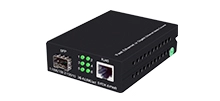
Gigabit DIP Media Converter 1000Base-X to 10/100/1000Base-T
MCAI-01S01G
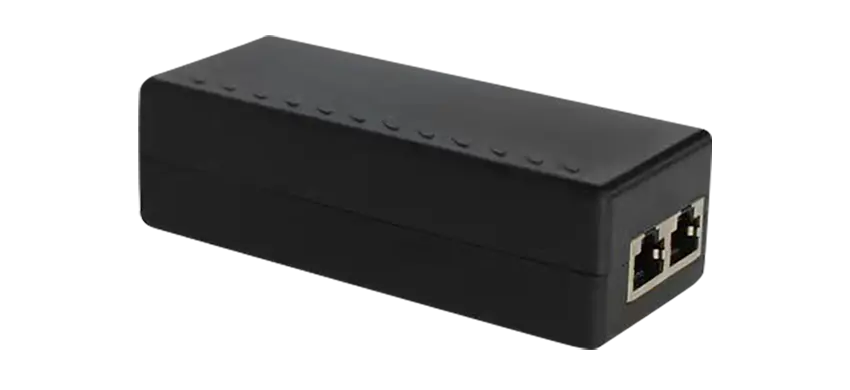
MCAI-01S01G is a single port PoE Injector, converts standard 100~240V/AC power into low voltage DC that runs over existing LAN cable to power up IEEE 802.3af/at compliant network accessories.
View details >
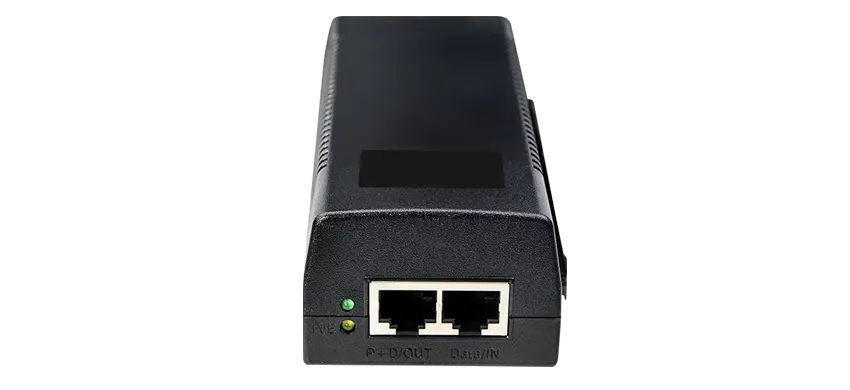
100M/1000M/2.5G PoE injector IEEE802.3af/at PoE+ 30w, LA-PSE-30T2.5G-D
LA-PSE-30T2.5G-D
LA-PSE-30T2.5G-D is a single port, high power PoE PSE solution for remote PoE PD devices. Generating up to 30Watts, it supplies remote power for new applications such as wireless access points.
View details >
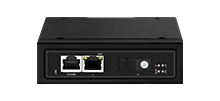
Industrial Single Port 10/100/1000Mbps/2.5G/5G/10G PoE Injector 60w
LA-IPOE60-10GT-Y
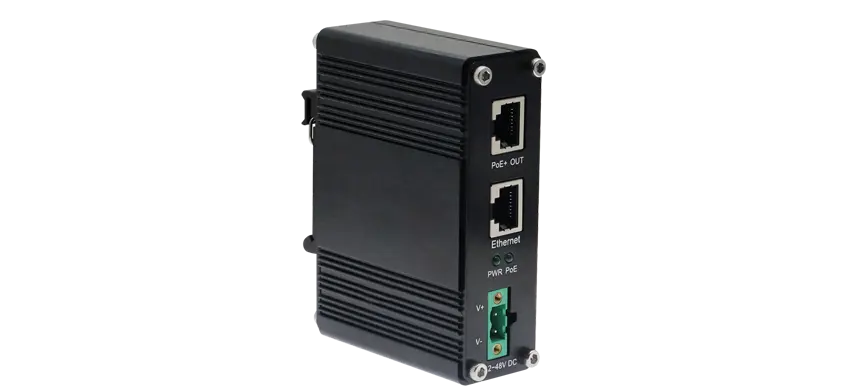
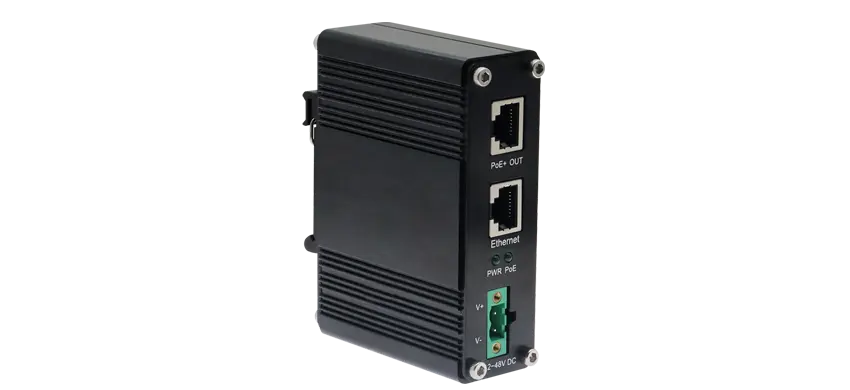
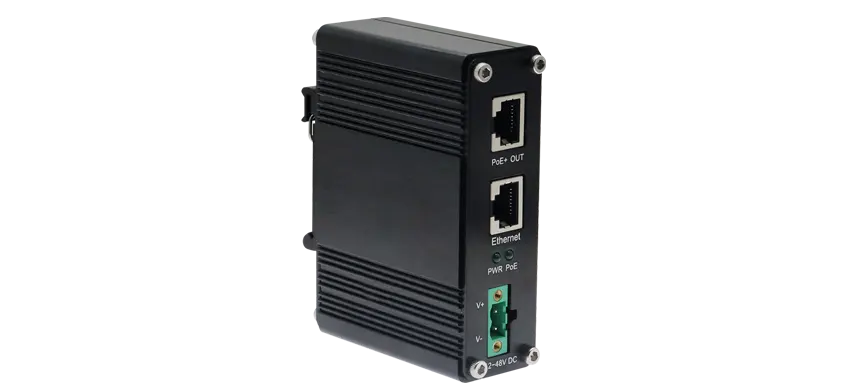
LA-IPOE60-10GT-Y is a hardened 10G PoE injector designed to connect IEEE802.3 af/at PoE devices, such as cameras and access points, to a non-PoE LAN switch over distances up to 100 meters.
View details >
Industrial Single Port 10/100/1000Mbps/2.5/5G PoE Injector 60w
LA-IPOE60-5GT-Y
LA-IPOE60-5GT-Y is a hardened 5G PoE injector designed to connect IEEE 802.3 af/at PoE devices, such as cameras and access points.
View details >
Industrial Single Port 10/100/1000Mbps/2.5G PoE Injector 30w
LA-IPOE30-2.5GT-Y
LA-IPOE30-2.5GT-Y is a hardened 2.5G PoE injector designed to connect IEEE 802.3 af/at PoE devices, such as cameras and access points, to a non-PoE LAN switch over distances up to 100 meters.
View details >
Outdoor Waterproof Gigabit PoE Extender IEEE802.3af/at/bt PoE++ 90w
LA-OPE-G11-90B-X
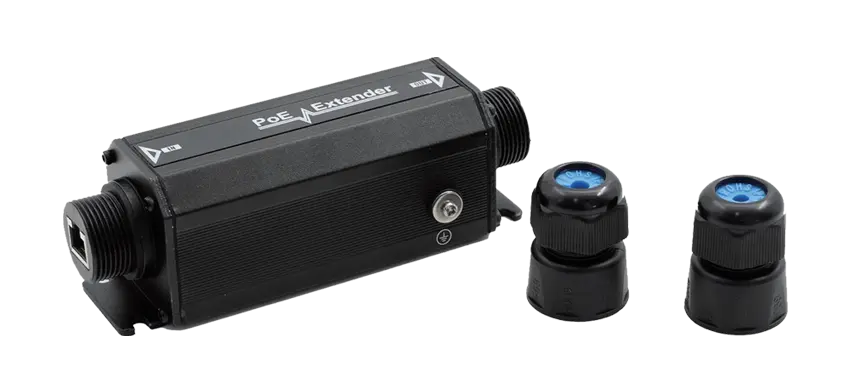
LA-OPE-G11-90B-X is Power over Ethernet (PoE) Extender, extend Ethernet and PoE to IP cameras at greater distances outdoor, greatly simplifies the deployment of IP cameras.
View details >
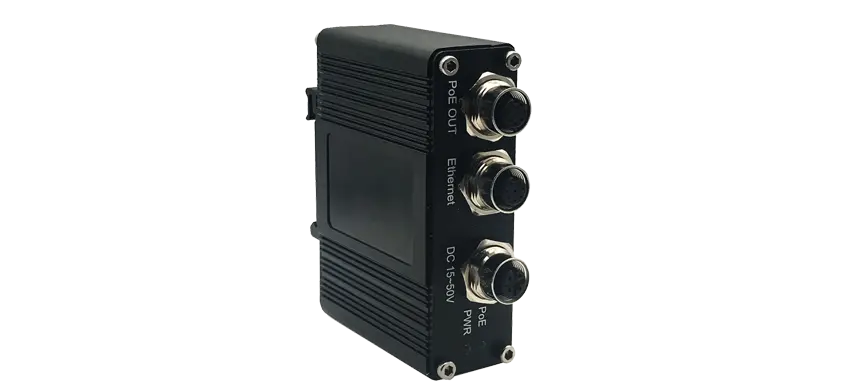
Industrial Single Port 10/100/1000 PoE Injector 30w M12 Connector
LA-POE30G-IM12
LA-POE30G-IM12 is designed for industrial applications, such as rolling stock, vehicle, and railway applications.
View details >
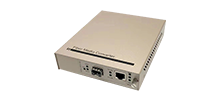
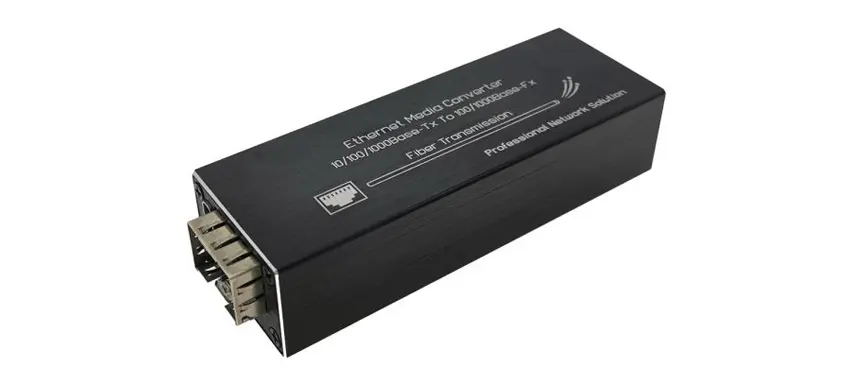
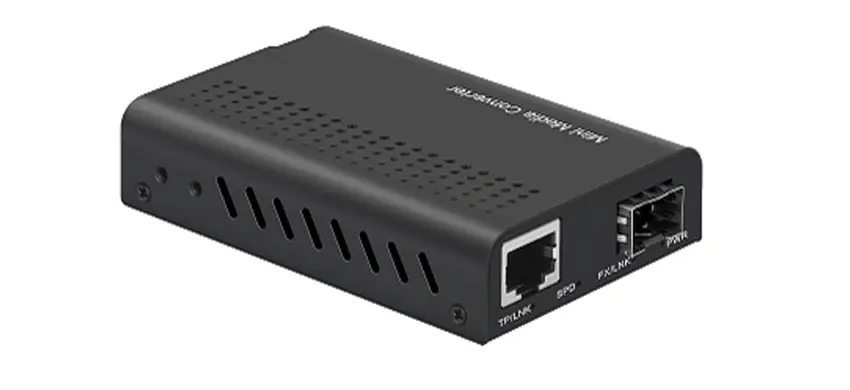
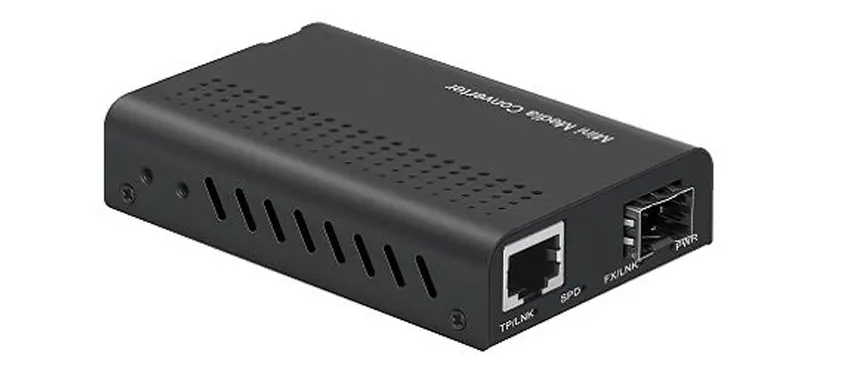
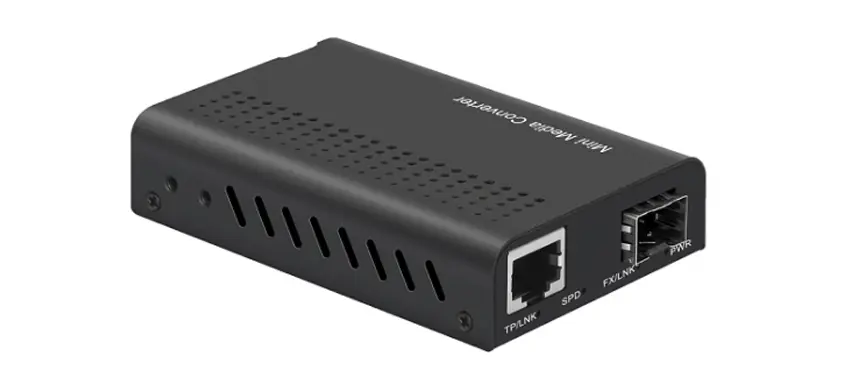
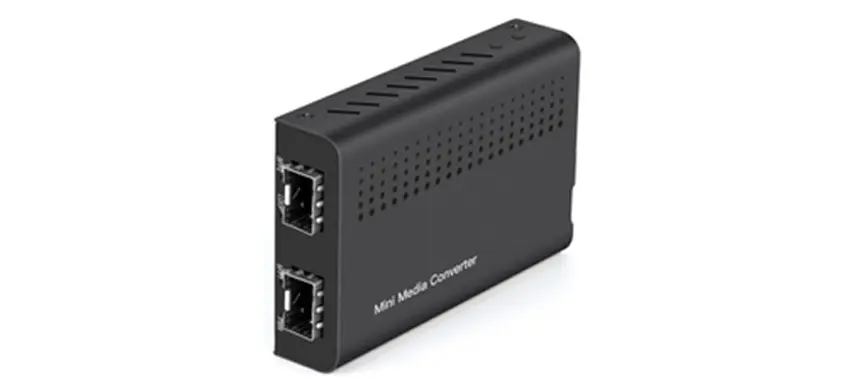
Ultra-compact Gigabit Media Converter
LA-MC1N-G0101Mini
This is the ultra-compact plug-and play 10/100/1000Base-T to 1000Base-X media converter which is designed for applications where compact size, light weight and low power are critical requirements.
View details >
Micro Gigabit Media Converter
Micro Gigabit Media Converter, SM, Duplex, 1310nm, 20km with AC to USB Adaptor and DC to USB Power Cord.
View details >
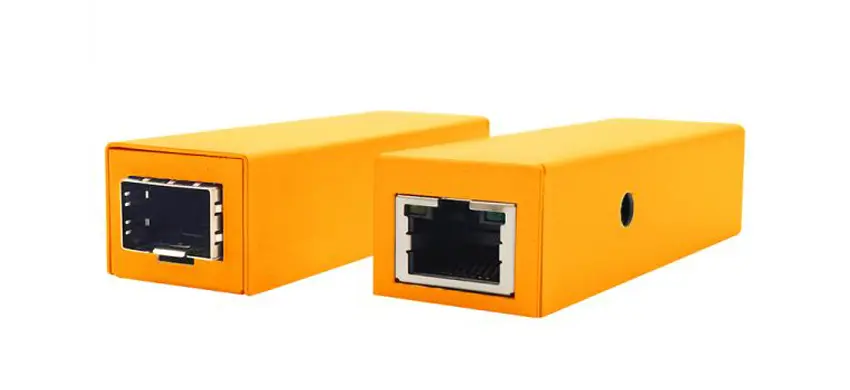
Micro Gigabit SFP Media Converter
LA-MC1N-G0101Micro
Micro Gigabit SFP Media Converter with AC to USB Adaptor and DC to USB Power Cord.
View details >
Miniature Fast Ethernet 10/100Base-TX to 100Base-FX Media Converter
LA-MC2N-F0101
LA-MC2N-F0101 is a Fast Ethernet stand-alone Mini media converter that provides the cost effective, entry-level media conversion between 10/100Base-TX ports and 100Base-FX ports.
View details >
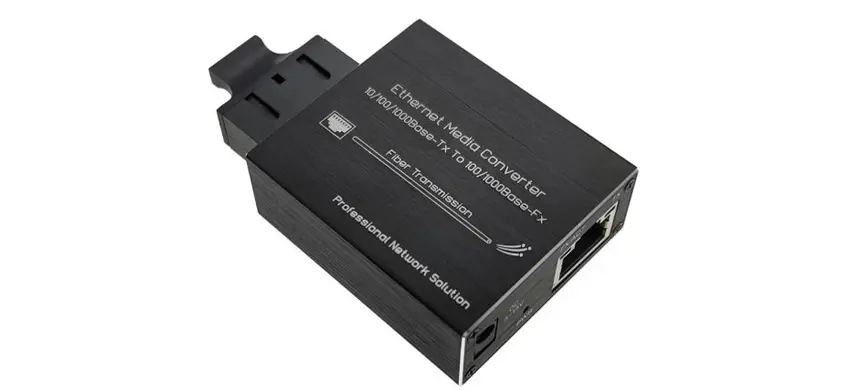
Miniature Full Gigabit 10/100/1000Base-TX to 100/1000Base-FX Media Converter
LA-MC2N-G0101
LA-MC2N-G0101 is a Gigabit Ethernet stand-alone Mini media converter that provides cost effective, entry-level media conversion between 1x10/100/1000Base-TX ports and 100/1000Base-FX ports.
View details >
Miniature 10Gbps Media Converter
LA-MC2N-10G0101
High-performance, using Optical - Electrical - Electrical wavelength conversion, realize the optical signal equilibrium amplification, clock extraction and optical regeneration.
View details >
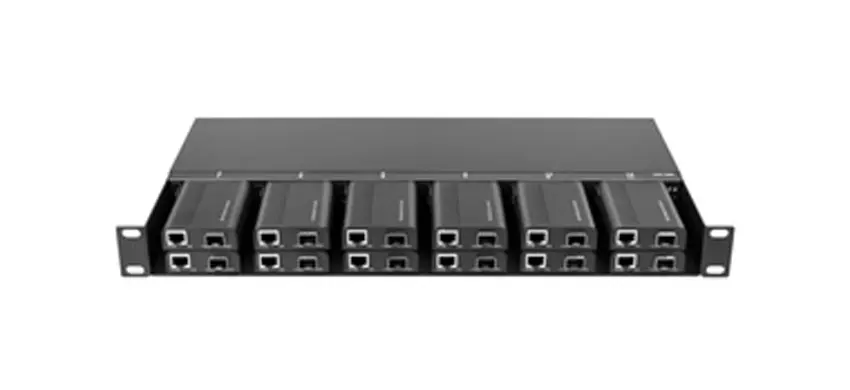
High Density Chassis 12-Slot Miniature Media Converter Rack
LA-MC2N-1U12
This 1U 12 slots media converter rack mount chassis is cost effective and supports dual power DC48V/AC220V.
View details >
Miniature Converter Multi-mode to Single-mode 125M~11.7G
LA-MC2N-10G0200
This miniature can quickly improve the communication capacity, expand the bandwidth, while using low cost and high cost-effective solutions to manage and operate the system.
View details >
100M/1000M/2.5G PoE injector IEEE802.3af/at PoE+ 30w, LA-PSE-30T2.5G-Y
LA-PSE-30T2.5G-Y
LA-PSE-30T2.5G-Y is a single port PoE Injector, converts standard 100~240V/AC power into low voltage DC that runs over existing LAN cable to power up IEEE 802.3af/at compliant network accessories.
View details >

Expand Your Network with Media Converter & Accessories

Enhance your network infrastructure with Media Converters and essential accessories, which enable smooth integration between copper and fiber optic networks. These devices allow seamless conversion of Ethernet signals to fiber, extending network reach and boosting performance. Perfect for expanding networks in telecom, data centers, or businesses, Media Converters provide flexibility and scalability. Paired with accessories like power supplies, fiber cables, and mounts, they ensure easy installation and reliable connectivity, making it easier to meet the demands of modern, high-speed network environments.

Expand Your Network with Media Converter & Accessories
Versatile Fiber Solutions with Media Converter & Accessories

Versatile Fiber Solutions with Media Converter & Accessories

Unlock versatile fiber solutions with Media Converters and accessories, designed to connect and expand your network seamlessly. Whether you need to convert Ethernet to fiber or bridge copper and fiber networks, these converters offer reliable, high-performance connectivity. Ideal for businesses looking to extend network reach or improve bandwidth, they provide flexible options for various network configurations. With essential accessories like power supplies, fiber cables, and mounting kits, Media Converter solutions ensure smooth installation and long-lasting network reliability, enhancing your infrastructure’s efficiency.

FAQs about Media Converter & Accessories

What is a fiber media converter?

A fiber media converter is a network device that allows for the conversion of Ethernet signals from copper cables (e.g., Cat5, Cat6) to fiber optic cables (e.g., SC, LC) and vice versa. This conversion enables long-distance data transmission, which is crucial in high-speed networks. Fiber media converters are essential for extending the range and improving the speed of data communications, especially in environments that require robust and interference-free data transmission.

Why do I need a fiber media converter?

You need a fiber media converter to integrate copper-based Ethernet networks with fiber optic infrastructure. Fiber media converters are particularly useful when you need to extend the network's range beyond the typical limitations of copper cables (100 meters for Cat5e cables) or when you require better network performance in terms of speed, reliability, and security. They are commonly used in industrial, commercial, and data center environments to optimize the network's efficiency.

How does a fiber media converter work?

A fiber media converter works by converting electrical Ethernet signals into optical signals that can travel through fiber optic cables. It has two main components: the electrical side (usually an RJ45 port for copper Ethernet) and the optical side (usually SC, LC, or ST connectors for fiber). The converter takes the data from one medium, converts it into optical format, and then transmits it over fiber, ensuring long-distance data transmission with minimal signal degradation.

What types of fiber media converters are available?

Fiber media converters are available in various types, depending on the specific application. The most common include:

1. Single-mode fiber converters: Designed for long-distance transmission (up to 120 kilometers or more).

2. Multi-mode fiber converters: Used for shorter distances (up to 2 kilometers).

3. Gigabit fiber media converters: Support high-speed Ethernet networks, enabling speeds up to 1 Gbps or more.

4. Fiber-to-Ethernet converters: Convert optical fiber to Ethernet copper for network expansion.

What are the key features to look for in a fiber media converter?

Key features to look for in a fiber media converter include:

1. Compatibility with fiber types: Ensure it supports the fiber standard you need, either single-mode or multi-mode.

2. Speed and bandwidth: Check if it supports the desired network speeds, such as 10/100/1000 Mbps or 10 Gbps.

3. Distance capabilities: Consider how far the converter can extend your network, from tens to hundreds of kilometers.

4. Power options: Some converters offer power over Ethernet (PoE), while others have external power supplies.

5. Reliability and durability: Look for converters with features like high-temperature tolerance and rugged designs for industrial settings.

Can fiber media converters be used in both directions?

Yes, fiber media converters are typically bi-directional. They can convert signals both from Ethernet to fiber and from fiber to Ethernet. Some converters automatically adjust to the type of signal being transmitted, making them highly versatile for different network configurations.

How do I choose between single-mode and multi-mode fiber media converters?

The choice between single-mode and multi-mode fiber media converters depends on the distance you need to cover. Multi-mode converters are ideal for shorter distances (up to 2 km), making them suitable for office buildings or local area networks. Single-mode converters, on the other hand, are designed for long-distance transmissions, offering greater bandwidth and reaching distances of over 100 kilometers. Select multi-mode for cost-effectiveness and single-mode for long-distance applications.

Are fiber media converters compatible with all Ethernet standards?

Fiber media converters are generally compatible with most common Ethernet standards, including 10/100/1000 Mbps and even 10 Gbps for higher-speed networks. However, it's important to verify that the specific converter supports the required Ethernet speed and protocols used in your network.

Can I use a fiber media converter to connect different network architectures?

Yes, fiber media converters can bridge different network architectures. For example, they can be used to connect an Ethernet network to a fiber optic network, or even integrate fiber optic networks with industrial or legacy copper-based systems. This capability makes fiber media converters essential for businesses that need to extend or upgrade their networks without replacing existing infrastructure.

What are the advantages of using fiber media converters over traditional copper Ethernet cables?

The primary advantages of using fiber media converters over traditional copper Ethernet cables include:

1. Longer transmission distances: Fiber optic cables can carry signals for many kilometers without significant signal loss.

2. Higher bandwidth: Fiber supports higher data rates, enabling faster network speeds.

3. Reduced electromagnetic interference: Fiber optic cables are immune to electromagnetic interference (EMI), ensuring stable data transmission in noisy environments.

4. Security: Fiber offers better data security due to its resistance to tapping.

Can fiber media converters be used in harsh environments?

Yes, many fiber media converters are designed to operate in harsh environments. Industrial-grade converters are built to withstand high temperatures, humidity, and vibration, making them ideal for manufacturing plants, outdoor installations, or oil and gas facilities. When selecting a converter for harsh environments, ensure it has the necessary certifications, such as IP ratings for dust and water resistance.

How do I install a fiber media converter?

Installing a fiber media converter typically involves the following steps:

1. Connect the fiber optic cable to the converter’s optical port.

2. Connect the Ethernet cable to the converter’s RJ45 port.

3. Plug in the power supply.

4. Power on the device and test the connection by sending data through the network. Some converters may also have LEDs that indicate the status of the connection.

How do fiber media converters improve network reliability?

Fiber media converters improve network reliability by ensuring that data can be transmitted over long distances without signal degradation, which is common with copper cables. Fiber optic cables are also immune to electromagnetic interference and physical damage, providing a more stable and secure connection. These features make fiber media converters essential in critical applications where high availability and performance are paramount.

Can fiber media converters be used in high-speed networks like 10 Gbps?

Yes, high-speed fiber media converters designed for 10 Gbps speeds are available. These converters support the high bandwidth required by modern data centers and high-performance applications. When choosing a converter for 10 Gbps networks, ensure it supports the appropriate fiber type (single-mode or multi-mode) and has the necessary specifications for your specific application.

What is the difference between managed and unmanaged fiber media converters?

Managed fiber media converters offer advanced features like remote monitoring, configuration, and troubleshooting, making them suitable for large or complex networks. They allow administrators to configure settings, manage network traffic, and track performance metrics. Unmanaged fiber media converters, on the other hand, are plug-and-play devices that provide basic conversion without configuration options. Managed converters are typically more expensive but provide greater flexibility and control.

Can fiber media converters work with PoE (Power over Ethernet)?

Some fiber media converters support Power over Ethernet (PoE), allowing them to deliver both power and data to remote devices, such as IP cameras, VoIP phones, and wireless access points, over a single Ethernet cable. PoE-enabled converters are especially useful in locations where power outlets are scarce or where simplifying wiring is important.

Are fiber media converters energy-efficient?

Many modern fiber media converters are designed to be energy-efficient, using low power for operation while still providing high-performance data conversion. Some models also offer power-saving features, such as automatic power-down modes or the ability to adjust power consumption based on load.

What are the limitations of fiber media converters?

While fiber media converters are highly effective, they do have some limitations:

1. Cost: Fiber converters can be more expensive than traditional copper Ethernet switches.

2. Compatibility: You need to ensure the converter supports the correct fiber type, speed, and protocol for your network.

3. Limited features: Unmanaged converters lack advanced configuration or monitoring options, which may limit their use in complex networks.

How do fiber media converters handle signal degradation?

Fiber media converters help minimize signal degradation by converting electrical signals to optical signals for transmission over fiber, which is less prone to attenuation and interference than copper cables. Additionally, fiber optic cables have higher bandwidth capacity, reducing the risk of network slowdowns and signal loss, even over long distances.

Can fiber media converters support full-duplex communication?

Yes, most modern fiber media converters support full-duplex communication, which allows data to be transmitted and received simultaneously. This improves network efficiency and reduces congestion, enabling faster data exchange between devices.

Are fiber media converters secure?

Fiber media converters provide a higher level of security compared to traditional copper-based Ethernet networks because fiber optic signals are difficult to tap or intercept. Additionally, since fiber cables do not emit electromagnetic signals, they are less vulnerable to eavesdropping or interference, making them a secure choice for sensitive or classified data transmission.

What is the lifespan of a fiber media converter?

The lifespan of a fiber media converter depends on its quality, usage, and environmental conditions. Industrial-grade converters can last many years, often exceeding 5-10 years of reliable operation. Regular maintenance and monitoring can also extend the device’s lifespan by ensuring it remains free from dust, moisture, and other damaging factors.

How Can We Help You Today
Lastest News & Blog about Lanbras
​SPS 2025: Smart Production Solutions Revolutionizing Industrial Efficiency
As we move further into the digital era, industries are undergoing rapid transformations. The automation, digitization, and smart manufacturing trends that once seemed distant are now reality. O...
Dec 03, 2025
Learn More
GITEX 2023 Dubai: Revolutionizing Industrial Communication Solutions
Welcome to GITEX 2023 in Dubai, where innovation meets opportunity. In this video, we’ll take you inside our exhibition booth to showcase the latest advancements in industrial communication technolog...
Nov 19, 2025
Learn More
Join Us at ISC2024: The Future of Industrial Communication
Get ready for ISC2024, the premier exhibition for the latest innovations in industrial communication! In this video, we’ll give you a sneak peek of what to expect at our booth. From cutting-edge netw...
Nov 18, 2025
Learn More
Follow us and the future of network.

Subscribe now, you can get over 100 valuable resources and white papers.

Follow us also can get the latest products and industry information in our members emails. Learn Details>>>

Lanao Communication Technology Limited.
Products and Solutions Inquiries