After a large number of internet cafe users were cut over to the S6500, the third tribulation struck! Nodes reported occasional service outages affecting one or several internet cafes connected under the S6500.

Service was restored after shutting down and re-enabling the corresponding GE access port on the S6500 for the faulty internet cafe.
The support team promptly dispatched engineers to the faulty nodes. On-site engineers checked the Ethernet cable connectors of the affected GE ports, port mode configurations, and the grounding of the S6500 chassis, but found no obvious problems. The only suspicious point was that the GE ports were configured in auto-negotiation mode.
The GE ports of the S6500 were set to auto-negotiation because the connected customer-end devices in internet cafes included both 1000M and 100M ports, and internet cafes with 100M ports might upgrade to 1000M at any time. Therefore, all GE ports on the S6500 were configured to auto-negotiation.

When FE/GE ports operate in auto-negotiation mode, compatibility issues with peer devices often cause link failures, frequent port Up/Down events, rate degradation, or packet loss. However, complete port lockup after a period of operation was rarely reported.
After thorough discussion with the customer, the support team decided to change all GE ports on problematic S6500 nodes to forced mode and keep records.
Nevertheless, reports of internet cafe service outages under S6500 continued to reach the trial support team. Each time, the team immediately sent engineers on-site to troubleshoot and collect fault data. For this specific issue, the S6500 R&D team also required on-site collection of debug information.
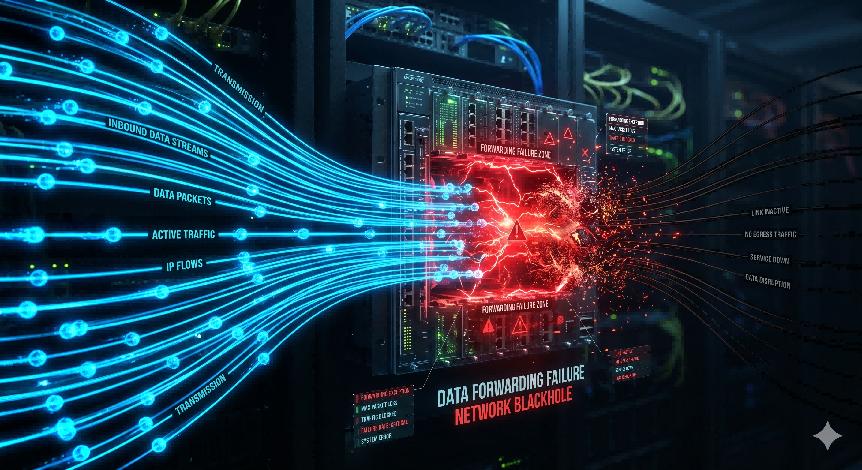
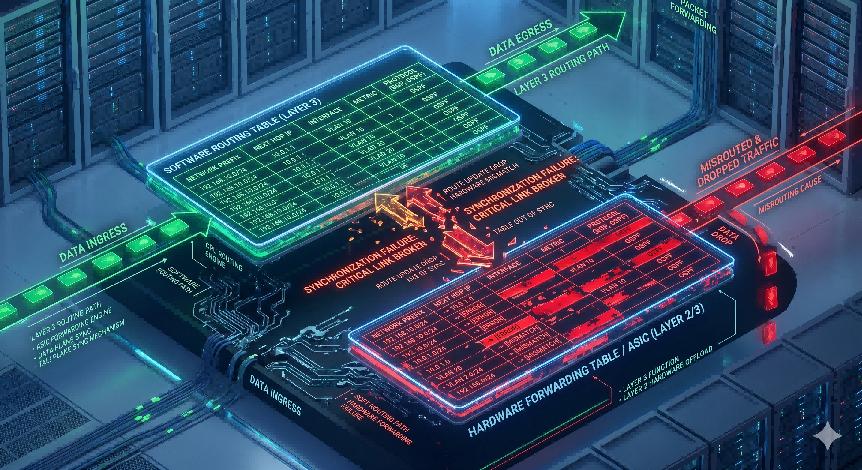
After analyzing fault logs and debug data from multiple nodes, the S6500 R&D team finally identified the root cause: abnormal Forwarding Information Base (FIB) table.
The FIB table abnormality stemmed from insufficient performance of the low-cost ASIC chip purchased under extreme cost-reduction measures. When a large volume of forwarding entries was written simultaneously, some entries could not be processed in time and were dropped.
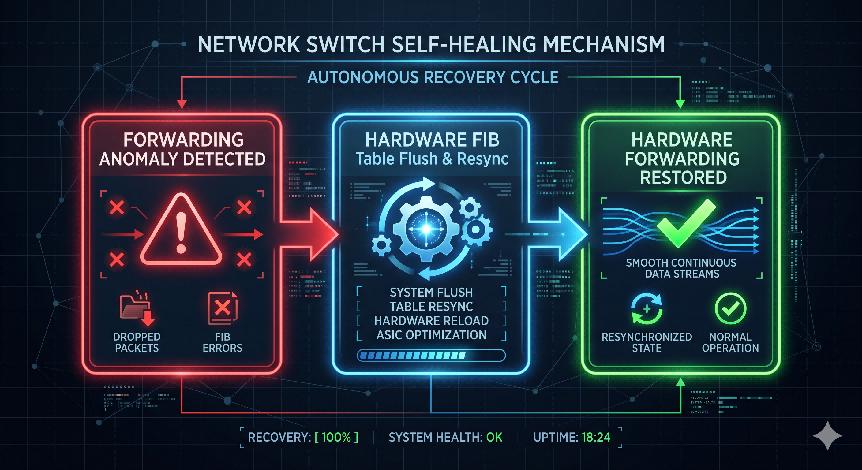
After pinpointing the root cause of the FIB table abnormality, the S6500 R&D team released a corresponding software version, which added rate control and queuing mechanisms for writing forwarding entries into the FIB table.
The S6500 trial support team then upgraded the software version on all S6500 switches at the 112 trial nodes, overcoming the third tribulation.

Subscribe now, you can get over 100 valuable resources and white papers.
Follow us also can get the latest products and industry information in our members emails. Learn Details>>>
Call us on:
Email Us:
2106B, #3D, Cloud Park Phase 1, Bantian, Longgang, Shenzhen, 518129, P.R.C.