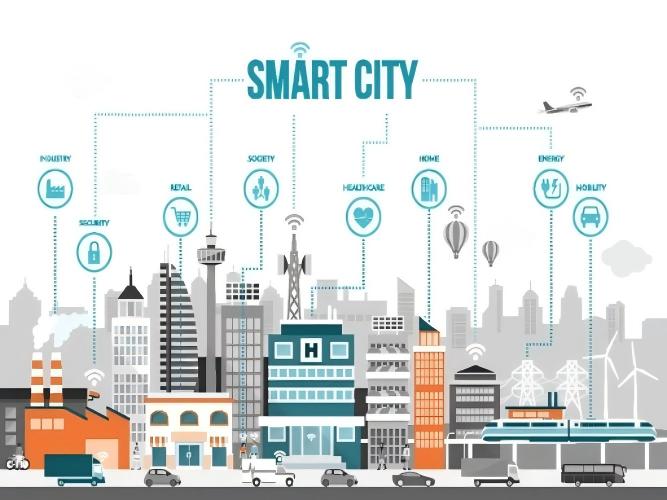
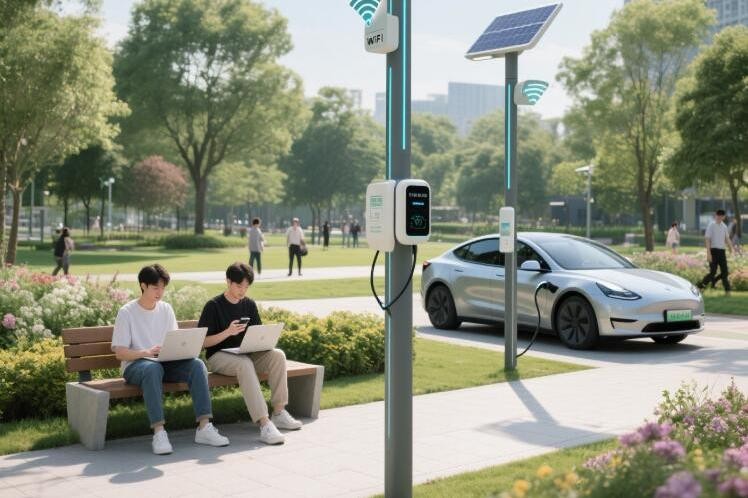
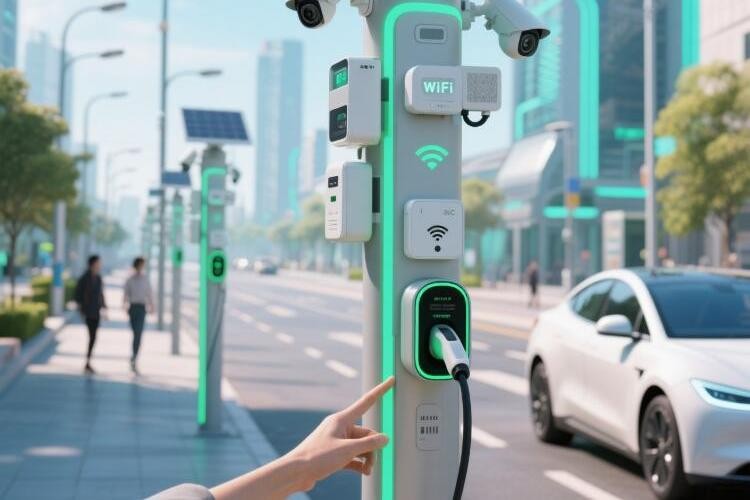
The rapid advancement of urban environments demands smarter, more resilient, and highly integrated infrastructure. At the core of this modern transformation is the IoT smart pole system, an all-in-one urban framework that replaces traditional streetlights with intelligent, connected structures. By integrating adaptive LED lighting, environmental sensors, surveillance networks, public Wi-Fi routers, and electric vehicle (EV) charging stations into a single mast, municipalities can eliminate urban clutter and optimize asset utilization.
However, moving a large-scale project from a theoretical layout to physical urban streets introduces intense engineering, operational, and administrative complexities. Packing high-density processing components, wireless modules, and heavy electrical lines into a singular vertical column presents hurdles that standard infrastructure factories cannot address. Overcoming these challenges requires partnering with experienced smart pole manufacturers who understand the technical realities of outdoor deployments. This comprehensive guide details the top five challenges faced during the installation and lifecycle management of these networks and outlines the strategies needed to achieve long-term field reliability.
1. Thermal Management: Preventing Inside Equipment Overheating Under Direct Sunlight
Thermal accumulation is one of the most critical engineering roadblocks encountered within a modern IoT smart pole system. Unlike standard desktop equipment sheltered inside air-conditioned server rooms, street-level hardware must endure continuous solar radiation. Inside the tightly sealed, cramped internal equipment compartments of the pole structure, active components—such as fiber optic switches, cellular modems, and edge computing gateways—generate considerable internal heat during continuous data processing and distribution.
When exposed to direct sunlight, unventilated metal columns act like greenhouses, causing internal temperatures to quickly exceed 65°C (149°F). If left unmanaged, this heat causes electronic components to experience thermal throttling, packet loss, or permanent hardware failure.
To resolve this issue, professional smart pole manufacturers engineer advanced passive and active airflow channels directly into the structural column. Utilizing the chimney effect—where lower air intake vents pull in cooler air and baffled upper exhaust vents reject thermal energy—allows natural convective currents to cool the internal chambers. Specialized internal components are also housed within secondary internal compartments featuring high-efficiency aluminum heat sinks and UV-reflective external coatings. This keeps internal operational temperatures within optimal boundaries, even during peak summer conditions.
2. Infrastructure Retrofitting: Can Existing Streetlights Be Upgraded Safely?
Tearing down miles of existing concrete or steel streetlights to build an entirely new network requires enormous capital investment and causes major disruptions to public traffic. Consequently, city planners frequently investigate whether legacy infrastructure can be retrofitted to support a modern IoT smart pole system.
The underlying challenge comes down to structural load limits and internal spatial capacity. Legacy streetlights were engineered only to support a basic luminaire head and minimal wind resistance. Hanging heavy multi-sensor arrays, 4K security cameras, and large digital LED signage displays significantly alters the pole's center of gravity and increases the wind load profile beyond safe engineering limits. Furthermore, older utility masts lack the interior structural space required to properly separate and route complex optical and copper wire layouts.
To bridge this gap without exceeding budgets, experienced engineers leverage modular retrofitting designs. Instead of altering the core mast structure, specialized external structural brackets and modular expansion sleeves are attached to the exterior of the pole. This allows teams to mount self-contained equipment enclosures directly to the outside of the frame, serving as a localized control hub that safely isolates the new hardware without risking a structural collapse or requiring an expensive foundation rebuild.
3. Multi-Department Integration: Resolving Segmented Ownership and Device Interfaces
Because a comprehensive IoT smart pole system performs a wide array of urban services, it simultaneously serves as a data hub for multiple government and private stakeholders:
Traffic Management: Collects real-time traffic flow data via optical license plate recognition sensors.
Environmental Agencies: Monitors air quality indexes (AQI), humidity, and local noise pollution levels.
Municipal Lighting Authorities: Controls automated, energy-saving LED dimming schedules.
Telecom Operators: Leases space for high-speed 5G network expansion and Wi-Fi antennas.
This multi-tenant setup creates logistical friction regarding hardware interface compatibility and data access permissions. If every department deploys proprietary equipment with unstandardized cabling, the structure quickly becomes an unmanageable mess.
Resolving this gridlock requires strict adherence to international standardizations, such as NEMA or Zhaga controller interfaces. Leading smart pole manufacturers design open-architecture centralized integration platforms at the base of the unit. This centralized hardware hub handles edge computing tasks and groups physical data cables into unified streams. By utilizing Virtual Local Area Networks (VLANs), data streams are securely split at the hardware level, passing relevant telemetry to its respective department while maintaining strict network isolation and preventing cross-department cyber vulnerabilities.
4. Power Allocation and Protection: Managing Mixed Voltages and Lightning Risks
Managing the power distribution infrastructure inside an integrated urban IoT smart pole system introduces complex electrical engineering challenges. A single pole structure must safely route and isolate multiple voltage layers running in parallel:
High-Voltage AC (110V/220V/440V): Feeds the primary utility grid, structural LED drivers, and heavy EV charging modules.
Low-Voltage DC (5V/12V/24V/48V): Powers sensitive IoT sensors, cellular modems, and edge computing controllers.
Running unshielded high-voltage lines next to low-voltage data cables causes intense electromagnetic interference (EMI), which corrupts data packets and reduces network speeds. Furthermore, because these structures are often the tallest metal objects in open urban spaces, they act as primary targets for lightning strikes. A single strike can send a massive voltage surge through the cabling, instantly frying the delicate electronic boards inside.
To organize and secure these paths, engineers classify and isolate the power layout based on electrical risk profiles, as detailed in the matrix below:
| Power Classification | Standard Voltage | Connected Target Equipment | Core Mitigation Strategy |
|---|
| High-Voltage AC Grid | 110V / 220V / 440V | Primary line supply, LED drivers, EV charging stations | Heavy-duty physical conduit isolation, dedicated circuit breakers |
| Low-Voltage DC Logic | 5V / 12V / 24V / 48V | Environmental sensors, cellular modems, edge gateways | Shielded twisted-pair cabling, localized step-down transformers |
| Surge Protection Layer | Up to 10kV / 20kV | Internal active networking switches and processors | Industrial-grade Surge Protection Devices (SPDs), structural earth grounding |
To shield the internal network from these vulnerabilities, engineers enforce strict physical isolation between high-power electrical conduits and communication lines. Heavy-duty, industrial-grade surge protection devices (SPDs) are installed on both incoming power inputs and copper Ethernet paths. Utilizing Power over Ethernet (PoE) technology via isolated industrial switches allows low-voltage devices to receive both power and data over a single shielded twisted-pair cable, minimizing internal cable clutter while providing strong galvanic isolation.
5. Long-Term Maintenance: Eliminating High Truck Roll Costs via Remote Diagnostics
The long-term operational expenditure (OPEX) of running a street-level device network can grow out of control if maintenance relies on manual field troubleshooting. When an edge camera freezes or a network gateway locks up, dispatching a specialized field vehicle (a "truck roll") and a technician bucket lift to inspect a pole-mounted component incurs heavy labor, scheduling, and logistical costs.
Additionally, conducting physical field service in dense metropolitan areas often requires blocking active lanes of traffic, causing public gridlock and creating safety hazards for the maintenance crew.
To eliminate unnecessary field visits, modern setups feature out-of-band remote management tools. Elite smart pole manufacturers build hardware watchdogs and smart power distribution units (PDUs) into the core electronics chassis. If an internal component or sensor drops offline and stops responding to automated network pings, the management system can automatically cycle power to that specific port or trigger a hardware reboot from the cloud. This automated self-healing process fixes software bugs remotely, restricting physical truck rolls to actual hardware replacements.
Conclusion: Building Resilient Smart Cities with Lanaotek Innovation
Overcoming the challenges of thermal stress, structural retrofitting, and power isolation requires an integrated approach to industrial hardware engineering. Building a reliable, long-lasting IoT smart pole system depends on working with high-quality components and maintaining precise production standards throughout the project lifecycle. By selecting the right structural materials, proper electrical isolation, and robust edge computing hardware, municipalities can ensure their smart networks remain stable and operational for years to come.
At Lanaotek, we manufacture state-of-the-art Optical and Ethernet Transmission solutions designed to meet the rigorous demands of modern infrastructure development. Our extensive portfolio includes heavy-duty industrial network devices and robust outdoor protection hardware certified to international quality standards including cETL, CE, FCC, and RoHS. We collaborate with global system integrators, telecom operators, and municipal contractors to deliver cost-effective and environmentally sustainable communication networks. To view our full line of industrial network hardware, browse our comprehensive products navigation page. If you are currently designing a smart city infrastructure network and need an expert engineering consultation, feel free to reach out to our technical support team directly through our contact page.
Frequently Asked Questions (FAQ)
1. What type of cable should be used to connect devices inside an IoT smart pole system?
For internal low-voltage connections and data runs under 100 meters, double-shielded, outdoor-rated Category 6 (Cat6) or Cat6A cables with UV-resistant jackets are required to prevent electromagnetic interference (EMI) from nearby high-voltage power lines. For long-distance network backhaul connection to a centralized municipal data hub, single-mode fiber optic cabling should be utilized.
2. Can an IoT smart pole system carry 5G small cells from multiple telecom operators?
Yes. Professional smart pole manufacturers design internal mounting spaces and antenna bay structures to support multi-operator configurations. By utilizing shared physical infrastructure and separate internal fiber allocations, a single pole can host micro-basestations for multiple cellular carriers simultaneously without causing cross-signal interference.
3. How does an IoT smart pole system handle cybersecurity at the street level?
Security must be managed at both the physical and network layers. Physical protection features heavy-duty tamper-proof latches, reinforced internal locking mechanics, and door-open alert sensors linked to a central municipal alarm system. Network-level security is maintained by disabling unused ports, enforcing strict MAC address authentication, and encrypting all outgoing data streams via secure VPN tunnels.
4. How long does a typical industrial IoT smart pole last in outdoor environments?
A professionally built structure engineered from hot-dip galvanized steel or marine-grade aluminum alloys, combined with a high-grade powder coating, has a structural life expectancy of over 20 to 25 years. Internal active electronic components are typically designed with an industrial Mean Time Between Failures (MTBF) rating of over 100,000 hours of continuous operation.
 EN
EN
 fr
fr  es
es  ru
ru  pt
pt  ar
ar  de
de 
 Internet Data Center
 FAQs
FAQs Industry News
 About Us
 Data Center Switch
  Enterprise Switch
  Industrial Switch
  Access Switch
  Integrated Network
  Optical Module & Cable


 Call us on:
  Email Us:
  2106B, #3D, Cloud Park Phase 1, Bantian, Longgang, Shenzhen, 518129, P.R.C.