Managing a corporate network across multiple office floors, regional branches, or retail locations comes with unique logistical challenges. When a network switch experiences a configuration error or an attached device drops offline, the speed at which your IT team can diagnose the issue directly impacts business continuity.
To streamline these operations, many modern enterprise networks are adopting centralized cloud management platforms. However, choosing between a traditional deployment and a modern cloud managed network switch framework is not about finding a universally perfect solution. Instead, it is about balancing your available technical staff, upfront budgets, and physical infrastructure layout.
This guide breaks down the practical operational differences between these two methodologies, helping you determine which approach aligns best with your organizational goals.
1. Understanding Traditional Network Switches and Their Limitations
Traditional network switches have been the reliable backbone of enterprise connectivity for decades. These devices are entirely self-contained, localized systems. To configure a virtual network (VLAN), modify security settings, or update device firmware, an IT administrator must interact directly with the specific piece of hardware. This is typically done either locally via a physical console cable or over the local area network (LAN) using a text-based Command Line Interface (CLI) or a local Web GUI.
While this architecture gives network engineers absolute granular control over the local hardware, it introduces distinct operational challenges as a business grows:
High Manual Configuration Overhead: Deploying multiple switches requires an IT engineer to manually unbox, script, and stage each individual device one by one before shipping them to branch locations.
Blind Troubleshooting: When an issue occurs at a remote branch, the central IT team lacks immediate visual clarity. They must rely on local, non-technical staff to describe blinking status lights, or use remote software to bridge into a local computer just to run diagnostics.
Inefficient Patch Management: Security patches and firmware updates must be downloaded and applied to each device individually, a time-consuming process that often increases the risk of delayed security updates across the company.
2. What Are Cloud Managed Switches and How Do They Work?
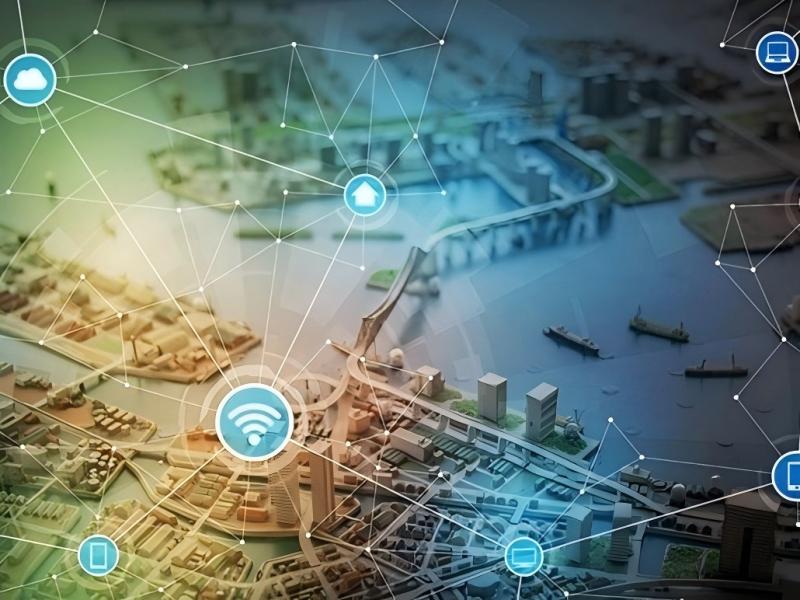
A cloud managed network switch resolves these localized limitations by decoupling the management control center from the physical hardware box. While the switch still sits in your local equipment rack to handle physical data cables and forward traffic at high speeds, its configuration interface and performance monitoring tools move up into a secure, centralized online dashboard.
This architectural shift changes how the hardware communicates and functions. When a cloud-ready switch is powered on and connected to the internet, it establishes a secure outbound connection to a centralized management platform. Instead of typing complex syntax codes into an isolated machine, network administrators log into a single web browser dashboard or mobile application.
From this single pane of glass, changes made on the dashboard are instantly pushed down to the physical switch over the internet. This integrated model of hardware and software coordination defines the modern approach to cloud managed switching.
3. Key Advantages of Cloud Managed Switches Over Traditional Solutions
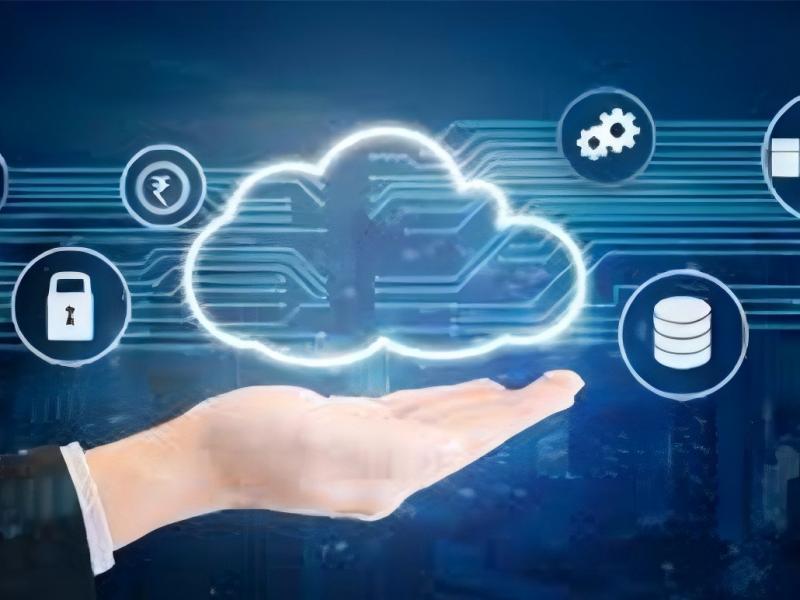
Transitioning to an ecosystem built around cloud managed switching provides several operational advantages that contrast sharply with traditional network deployment methods.
Zero-Touch Provisioning (ZTP): Instead of staging hardware at a central headquarters, unconfigured switches can be shipped directly to remote sites. Once a local employee plugs in the power and internet lines, the device automatically downloads its pre-assigned configuration profile from the cloud, making deployment simple and fast.
Real-Time Visual Topology: The cloud platform automatically generates interactive visual maps of your entire distributed network. IT teams can monitor real-time bandwidth consumption on individual ports and instantly see where bottlenecks or cable failures occur across the organization.
Remote Port Control: If a connected device like an IP camera or wireless access point freezes, technicians can use the dashboard to remotely cycle the Power over Ethernet (PoE) on that specific port. This restarts the target device in seconds without requiring an on-site visit or a full network reboot.
4. Simplifying IT Management and Reducing Operational Costs
When evaluating networking infrastructure, focusing solely on the upfront purchase price can obscure the long-term financial reality. A complete financial assessment must balance initial capital expenditure (CAPEX) against ongoing operating expenses (OPEX).
Traditional switches are highly attractive from a CAPEX perspective. They generally feature a lower upfront hardware cost and do not require ongoing software licensing fees. However, if your business operates dozens of small remote branches, the long-term OPEX can rise due to the time and travel costs required for an IT team to manually maintain separate, unlinked devices across multiple regions.
A cloud managed network switch infrastructure operates on a different financial model, optimizing long-term OPEX:
| Business Metric | Traditional Network Setup | Cloud Managed Network Setup |
|---|
| Initial Deployment Cost | Higher engineering labor hours for staging and localized installation. | Lower deployment labor; utilizes automated internet onboarding. |
| Ongoing Maintenance Cost | Higher travel or third-party dispatch fees for remote site troubleshooting. | Lower operational costs; enables remote fixes and automated bulk updates. |
| Software Licensing | No recurring software fees; firmware updates are managed manually. | Includes a predictable ongoing cloud platform subscription fee. |
For multi-location businesses, the cloud subscription fee balances out by maximizing the efficiency of a lean, centralized IT team. By allowing a single administrator to manage multiple branches remotely, businesses can scale their operations upward without a linear increase in localized IT maintenance overhead.
5. Which Switch Solution Is Right for Your Business? Decision Guide
Ultimately, neither technology is inherently superior; the right choice depends entirely on your organizational structure and business priorities.
Choose a Traditional Switch Setup If:
Your business operates out of a centralized main office or a single large facility.
You have a dedicated, permanent on-site IT department that demands absolute control over local hardware configurations.
Your network operates under strict regulatory environments requiring zero external cloud dependencies or management links.
Choose a Cloud Managed Switch Setup If:
You manage multiple distributed branch offices, retail stores, or a chain of hospitality locations.
You want to maximize the efficiency of a lean IT team by eliminating the need to send technical staff on-site for routine adjustments.
Your organization values rapid expansion, automated security patching, and real-time visual network monitoring.

Conclusion: Partnering with Lanaotek for Reliable Connectivity
Whether your architecture requires the deep standalone control of a traditional deployment or the simplified agility of a cloud managed network switch ecosystem, selecting dependable hardware remains critical to ensuring system uptime.
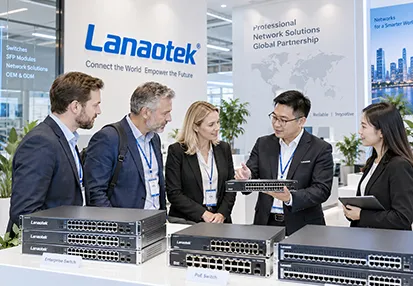
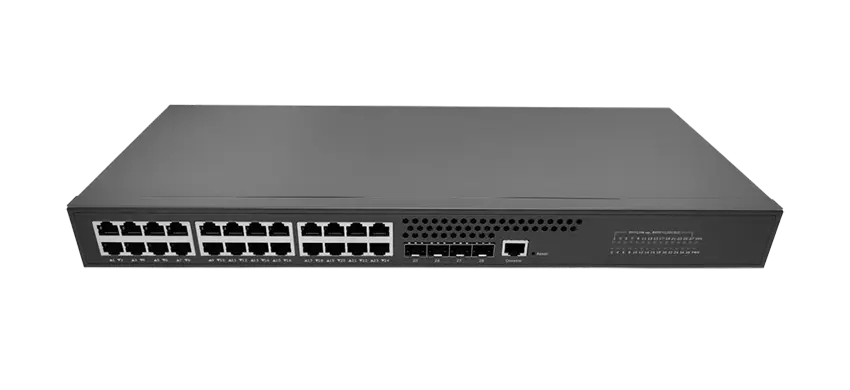
At Lanaotek, we manufacture a versatile range of high-performance network hardware designed to meet diverse enterprise requirements. Our portfolio includes robust communication switches certified to international quality and safety standards, including cETL, CE, FCC, and RoHS. Whether you are building a localized server network or deploying an integrated cloud-managed environment, we deliver dependable connectivity solutions that optimize performance.
To explore our full line of switching platforms, visit our products navigation page. If you are currently designing your next network upgrade and would like an objective engineering consultation on the best deployment model for your team, please contact us through our contact page.
Frequently Asked Questions (FAQ)
1. What happens to my local network traffic if the internet connection to the cloud dashboard drops?
Your local network will continue to operate normally. A cloud managed network switch only relies on the internet connection to send monitoring data or receive configuration updates from the dashboard. All local data switching, routing, and power delivery (PoE) are handled entirely by the internal hardware chips on the device itself.
2. Is cloud managed switching secure enough for networks handling confidential data?
Yes. The communication tunnel between the local switch and the centralized dashboard is fully encrypted using secure protocols like TLS. Additionally, your actual business data traffic (such as internal files or customer records) remains local on your network and never travels to the cloud management platform; only management commands and system health statistics pass through the cloud link.
3. Can I manage traditional network switches using a cloud management dashboard?
No. Traditional switches lack the specific internal firmware components and cloud-connectivity code required to communicate with a centralized management platform. While you can use traditional and cloud-managed switches together within the same physical network topology, the traditional units must still be configured individually using standard local methods.
4. What happens if a cloud managed network switch license expires?
If the subscription license expires, the switch will continue to run normally using its last saved configuration, ensuring your network stays online. However, you will lose the ability to make remote configuration adjustments, view real-time traffic statistics, or receive automated firmware updates through the central cloud dashboard until the license is renewed.
 EN
EN
 fr
fr  es
es  ru
ru  pt
pt  ar
ar  de
de 
 Internet Data Center
 FAQs
FAQs Industry News
 About Us
 Data Center Switch
  Enterprise Switch
  Industrial Switch
  Access Switch
  Integrated Network
  Optical Module & Cable

 Call us on:
  Email Us:
  2106B, #3D, Cloud Park Phase 1, Bantian, Longgang, Shenzhen, 518129, P.R.C.