A mobile core network usually consists of a small number of sites. For medium and small-sized countries, the deployment generally adopts one primary site plus one standby site. Site selection mainly depends on the locations of core nodes on backbone optical cables, power supply conditions, and terrain for disaster prevention and mitigation.
As a new market entrant, Telenor Myanmar only held a telecom operating license when it entered the local market. To rapidly deploy a nationwide mobile communication network, the operator adopted a development principle: prioritize leasing over self-construction, minimize new builds, and centralize equipment deployment wherever possible.
Back in 2013, Myanmar's telecom market was monopolized by state-owned operator MPT, which controlled most existing site resources, optical cable resources and network assets. Given the outdated status of MPT's legacy network, the operator was negotiating with Japan's KDDI for network upgrade and renovation. In consideration of brand competition and convenient network maintenance, Telenor Myanmar finally decided not to lease MPT's mobile core network resources.
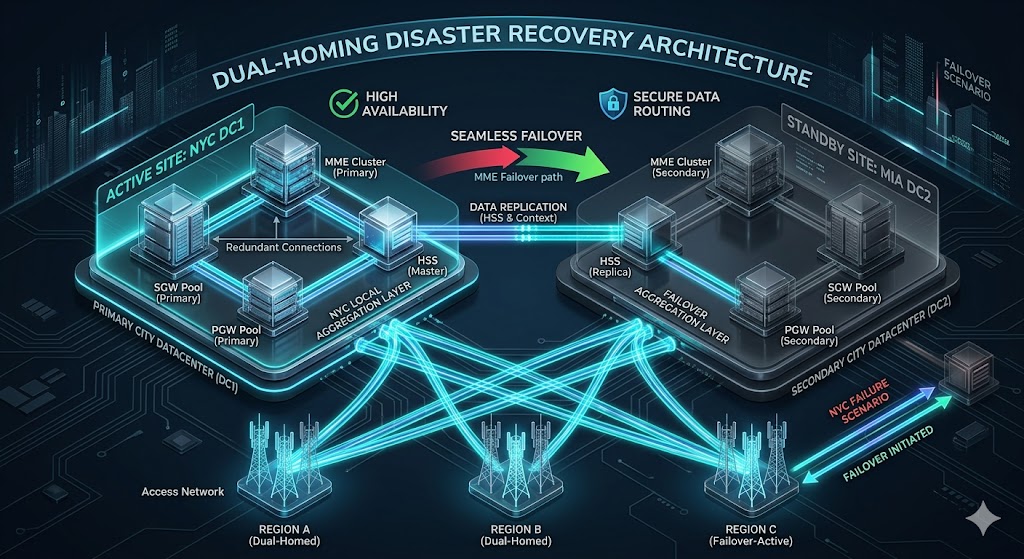
After comprehensive evaluation, Telenor Myanmar's management finalized the mobile core network construction plan: acquire land or premises near the two core nodes of MPT's backbone optical cables in downtown Yangon to build dedicated core network equipment rooms. To shorten the construction cycle, the operator adopted the latest containerized mobile core network solution from Company H. In addition, new optical cables needed to be deployed to connect the two newly-built core sites to the two core node equipment rooms of MPT's backbone optical network.
The containerized mobile core network solution from Company H features a modular design. Functional modules can be selected and configured according to technical standards and service types, and the required quantity of each module can be automatically calculated based on the subscriber scale. Once the module configuration is confirmed, the corresponding network planning document template is finalized. Relevant parameters of Telenor Myanmar's mobile core network only need to be filled in to generate the complete network planning documents.
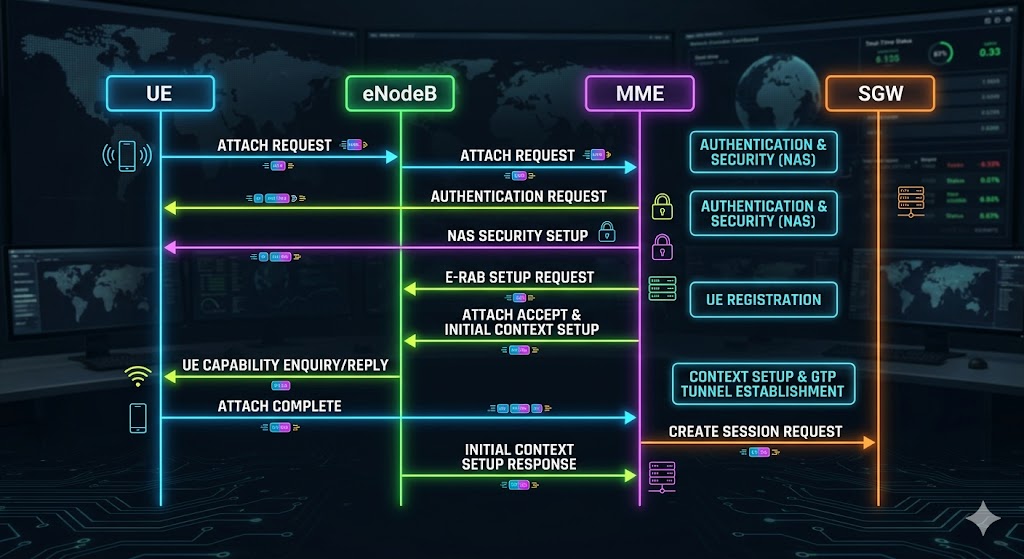
All equipment production and hardware integration are completed at Company H's factory. After delivery to the site, the containers only need to be hoisted into position and connected to power supplies and optical cables, before proceeding to the subsequent phases including software commissioning and system integration.
Telenor Myanmar formulated the mobile core network plan targeting 5 million subscribers for Phase I, with a gradual capacity expansion up to 20 million subscribers in the future, and supporting standard 4G services. The detailed planning is as follows:
The two core network sites are each located within 1 kilometer of the two core nodes on MPT’s backbone optical cables.
The two core sites work in a 1:1 active-standby redundancy mode.
The containerized mobile core network solution for Phase I is configured to support 5 million subscribers, with reserved expansion capacity for up to 20 million subscribers.
Civil engineering construction for the two core sites is designed to accommodate the total number of containers required for the 20-million-subscriber scale.
By Lanaotek
Lanaotek specializes in translating cutting-edge optical and Ethernet transmission technologies into clear, valuable insights that help our customers stay ahead in a fast-evolving digital world.
By turning complex technical concepts into practical, business-driven content, we aim to empower decision-makers with the knowledge they need to make confident, future-ready choices.
 EN
EN
 fr
fr  es
es  ru
ru  pt
pt  ar
ar  de
de 
 Internet Data Center
 FAQs
FAQs Industry News
 About Us
 Data Center Switch
  Enterprise Switch
  Industrial Switch
  Access Switch
  Integrated Network
  Optical Module & Cable






 Call us on:
  Email Us:
  2106B, #3D, Cloud Park Phase 1, Bantian, Longgang, Shenzhen, 518129, P.R.C.