Telecom networks are carrying more data across more connected devices than ever, but higher bandwidth alone does not determine whether an Ethernet switching solution is suitable for a telecom application. Network architecture, traffic patterns, port configuration, scalability, and connectivity all influence how efficiently data can move between access, aggregation, and edge systems.
For this reason, choosing a Marvell Ethernet switch for telecom equipment requires more than comparing maximum switching capacity or individual port speeds. The switch needs to fit the role it will play in the network and continue to perform as traffic and connection requirements change. The same principle applies when evaluating a Marvell automotive Ethernet switch, although automotive applications introduce a different set of networking and environmental requirements.
What Performance Requirements Should Marvell Ethernet Switches Meet in Telecom Networks?
Performance starts with the ability to move traffic reliably under the conditions expected in the target network. A Marvell Ethernet switch should provide enough switching capacity to handle the combined traffic of its interfaces without becoming a bottleneck between network segments.
However, raw throughput is only part of the picture. Telecom networks often carry different types of traffic at the same time, including data services, video, voice, control information, and traffic associated with mobile or broadband infrastructure. These flows do not necessarily have the same priority or latency requirements. A switching platform therefore needs to manage traffic efficiently when demand changes rather than simply delivering high bandwidth under ideal conditions.
Latency and traffic behavior during congestion are particularly important in networks where service continuity matters. Buffering, queue management, quality-of-service capabilities, and traffic prioritization can all influence how a switch behaves when several interfaces are active simultaneously. Evaluating these characteristics alongside switching capacity gives network designers a much more realistic view of performance.
How Do Port Speed and Port Density Affect Telecom Network Capacity?
Port speed and port density shape the way a telecom switching platform is built. Higher-speed ports allow individual connections to carry more traffic, while greater port density makes it possible to connect more devices within a single switching system. Neither characteristic should be considered in isolation.
For example, a switch positioned close to an access layer may need a large number of ports, while an aggregation switch may place greater emphasis on high-speed uplinks. If the uplink capacity is not properly matched to the traffic entering the switch, simply increasing the speed of access interfaces will not necessarily improve overall network performance.
| Consideration | Influence on Telecom Networks | Key Question |
|---|
| Port speed | Determines the bandwidth available to each connection | Does the interface speed match the expected traffic? |
| Port density | Determines how many devices can be connected within the platform | Can the switch accommodate the required number of interfaces? |
| Switching capacity | Affects aggregate traffic handling | Can the platform handle peak traffic without becoming a bottleneck? |
| Latency and buffering | Influence traffic behavior under load | How does the switch respond to bursts and congestion? |
| Traffic management | Helps maintain service priorities | Can critical traffic be handled appropriately when networks are busy? |
This makes port selection an architectural decision rather than a simple specification comparison. When reviewing a Marvell Ethernet switch, telecom equipment manufacturers should consider where the switch will sit in the network, what devices it will connect, and how traffic will move through its uplinks.
How Do Marvell Ethernet Switches Handle High-Bandwidth Telecom Traffic?
High-bandwidth telecom traffic is not always predictable. A network may experience sustained data flows during normal operation and sudden traffic bursts when multiple services become active at the same time. The ability to manage these conditions is therefore just as important as the nominal bandwidth of the switch.
A well-designed switching platform needs to move packets efficiently while preventing less important traffic from unnecessarily affecting services with tighter performance requirements. Features such as quality of service, VLAN support, queue management, and congestion control can help organize traffic as it moves through the network.
Uplink design is another important consideration. Several access interfaces may feed traffic into a smaller number of aggregation links, creating periods of higher demand. The switch architecture should be capable of handling these traffic patterns without undermining the performance expected from the connected equipment.
For this reason, evaluating a Marvell Ethernet switch should involve the actual traffic model of the telecom system. Looking only at a maximum switching figure may overlook how the platform behaves when traffic becomes uneven, bursty, or heavily concentrated on particular interfaces.
How Does Switch Scalability Support Telecom Network Expansion?
Telecom infrastructure is rarely designed for a fixed traffic level. New subscribers, additional services, edge computing, higher-resolution media, and increasing cloud connectivity can all change network traffic over the operating life of the equipment. A switching platform that meets today's requirements but leaves little room for growth can eventually become a limitation on the wider system.
Scalability should therefore be considered at the architecture stage. It includes more than adding bandwidth. The number of interfaces, uplink configuration, traffic segmentation, management capabilities, and compatibility with future equipment can all influence how easily a network can expand.
This is also an important distinction when comparing different Ethernet switch categories. A Marvell automotive Ethernet switch may be highly appropriate for connected vehicle systems, where networking requirements are shaped by automotive architectures and operating conditions. Telecom infrastructure, on the other hand, may place greater emphasis on aggregation capacity, network management, service separation, and the ability to accommodate large numbers of connections.
Looking at the available Ethernet switching products in the context of the intended network architecture can therefore be more useful than choosing a device solely from its headline specifications. The right platform is the one whose capabilities align with both the current design and the expected direction of expansion.
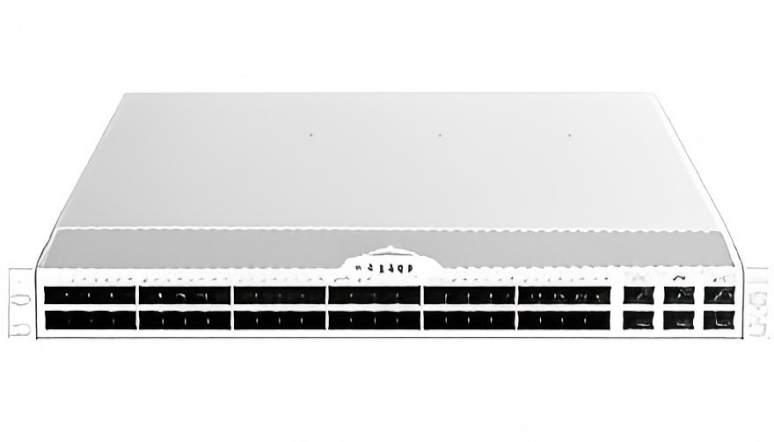
Which Connectivity Features Matter in Telecom Ethernet Switching?
Connectivity requirements vary considerably between telecom systems. A switch may need to connect access equipment, routers, optical networking components, edge devices, or other infrastructure, and each part of the network can have different interface and bandwidth requirements.
Logical connectivity matters as well. VLAN support and traffic segmentation can help separate services sharing the same physical infrastructure, while quality-of-service functions can help distinguish traffic according to its operational importance. In larger networks, management and monitoring capabilities also become increasingly important because network administrators need visibility into how traffic is moving through the system.
Synchronization may also need attention in telecom environments where accurate timing contributes to coordinated network operation. The exact requirements depend on the application and architecture, so synchronization should be evaluated as part of the complete system rather than treated as a universal requirement for every Ethernet switch.
The same application-first approach is useful when considering a Marvell automotive Ethernet switch. Automotive networking may require different approaches to communication, timing, physical integration, and environmental performance. The fact that both solutions use Ethernet does not mean they should be evaluated against identical criteria.
What Should Be Evaluated Before Deploying Marvell Ethernet Switches in Telecom Networks?
Before a switching platform is selected, it is useful to map the expected traffic and connections onto the actual network architecture. This makes it easier to determine whether the required port speeds, port count, uplinks, and switching capacity are properly balanced.
Interoperability should then be considered alongside performance. A switch needs to work with the other networking components already present in the system, including routers, optical interfaces, access equipment, and management infrastructure. Physical integration can be equally important for telecom equipment manufacturers, particularly when board space, power consumption, thermal conditions, or connector placement impose design constraints.
Future requirements deserve the same attention. If traffic is expected to increase substantially over the product lifecycle, selecting a platform with no practical expansion path may lead to another hardware redesign later. A better approach is to understand the expected growth of the network and select switching capabilities that leave sufficient room for that development.
Supplier support can also influence the success of a deployment. When a switching solution needs to fit a specific telecom architecture, discussing interface requirements, traffic conditions, system integration, and potential customization before finalizing the design can prevent avoidable compatibility issues. For projects that require a more detailed assessment, the technical team at LanaoTek can be contacted directly to discuss the application and corresponding Ethernet switching requirements.
Conclusion
Selecting Ethernet switching technology for telecom networks is ultimately a matter of matching the switch to the way the network actually operates. Port speed and switching capacity are important, but they do not tell the whole story. Traffic behavior, port density, uplink design, scalability, connectivity, management, and system integration can have an equally significant impact on the final result.
A Marvell Ethernet switch should therefore be evaluated within the context of the complete telecom architecture rather than as an isolated hardware component. At the same time, a Marvell automotive Ethernet switch should be assessed according to the requirements of automotive networking rather than assumed to be a direct substitute for telecom-oriented switching equipment. Taking this application-specific approach allows manufacturers and network integrators to build switching systems that can handle present traffic while remaining practical as network requirements evolve.
FAQs
1. What is a Marvell Ethernet switch used for in telecom networks?
A Marvell Ethernet switch can connect networking equipment and manage Ethernet traffic between different parts of a telecom infrastructure. Its suitability depends on the required bandwidth, interfaces, traffic characteristics, and system architecture.
2. Why are port speed and port density important?
Port speed determines how much traffic an individual interface can carry, while port density determines how many connections can be supported by the switching platform.
3. What should be considered when handling high-bandwidth telecom traffic?
Besides switching capacity, designers should consider traffic bursts, congestion behavior, buffering, quality of service, queue management, and the relationship between access ports and uplinks.
4. How does scalability affect telecom switch selection?
Scalability determines whether the switching architecture can accommodate increasing traffic, additional connections, and future network expansion without requiring a complete redesign.
5. Is a Marvell automotive Ethernet switch the same as a telecom Ethernet switch?
No. Although both use Ethernet technology, an automotive Ethernet switch is designed around the specific networking and operating requirements of automotive systems.
6. What should manufacturers evaluate before deploying an Ethernet switch?
They should review bandwidth, port configuration, switching capacity, traffic management, interoperability, physical integration, scalability, and supplier support against the requirements of the target network.
By Lanbras
Lanbras specializes in translating cutting-edge optical and Ethernet transmission technologies into clear, valuable insights that help our customers stay ahead in a fast-evolving digital world.
By turning complex technical concepts into practical, business-driven content, we aim to empower decision-makers with the knowledge they need to make confident, future-ready choices.
 EN
EN
 fr
fr  es
es  ru
ru  pt
pt  ar
ar  de
de 
 Internet Data Center
 FAQs
FAQs Industry News
 About Us
 Data Center Switch
  Enterprise Switch
  Industrial Switch
  Access Switch
  Integrated Network
  Optical Module & Cable

 Call us on:
  Email Us:
  2106B, #3D, Cloud Park Phase 1, Bantian, Longgang, Shenzhen, 518129, P.R.C.