Choosing Between L2+ and Layer 3 Managed Switches for Enterprise Networks: 2026 B2B Procurement Guide
Selecting the right networking infrastructure is critical for System Integrators, Internet Service Providers (ISPs), and Enterprise IT Department Heads. As corporate bandwidth requirements continue to grow, network architects face a recurring challenge: Should you deploy L2+ managed switches or full Layer 3 managed switches at the access and distribution layers?
Making the wrong decision can lead to network bottlenecks, unnecessary procurement costs, or complex maintenance routines. This guide explores the key architectural differences, application scenarios, and evaluation criteria to help B2B buyers select the right Ethernet switches for high-performance enterprise deployments.

1. Understanding L2+ vs. Layer 3 Managed Switches
To build a reliable enterprise network, it is essential to understand how packet switching and routing operate across the OSI model.
1.1 What Is an L2+ (Layer 2 Plus) Managed Switch?
An L2+ switch, often referred to as an enhanced Layer 2 switch or a Lite Layer 3 switch, combines comprehensive Layer 2 features with basic static IP routing.
Typical features include:
VLANs (Virtual Local Area Networks)
STP/RSTP (Spanning Tree Protocol/Rapid Spanning Tree Protocol)
LACP (Link Aggregation Control Protocol)
QoS (Quality of Service)
IGMP Snooping
Static routing and, depending on the model, static ARP
Instead of forwarding all inter-VLAN traffic to an external router, an L2+ managed switch can route traffic between configured subnets locally. This can reduce the load on the edge router while keeping hardware costs manageable.
Best suited for: Enterprise access networks, small and medium-sized businesses, IP surveillance systems, and industrial networks that require basic routing without advanced dynamic routing protocols.
1.2 What Is a Full Layer 3 Managed Switch?
A full Layer 3 managed switch operates at the network layer of the OSI model. In addition to static routing, it may support dynamic routing protocols such as OSPF, BGP, and RIP, as well as redundancy mechanisms such as VRRP, depending on the model and software feature set.
Layer 3 switches are commonly deployed in enterprise distribution and core networks, where they can manage routing between multiple subnets, support redundant network paths, and help maintain connectivity during link or device failures.
Best suited for: Large enterprise campuses, data centers, ISP aggregation networks, and other environments requiring scalable routing and network redundancy.
2. Key Differences: L2+ vs. Layer 3 Managed Switches
Understanding the differences between L2+ and Layer 3 switches helps buyers match network capabilities to actual deployment requirements.
| Feature / Metric | L2+ Managed Switch | Layer 3 Managed Switch |
|---|
| Routing Capability | Static routing; static ARP may be supported | Static and dynamic routing, depending on the model |
| Dynamic Routing Protocols | Generally not supported | May support OSPF, BGP, RIP, or other protocols |
| Typical Network Position | Access and aggregation layers | Distribution and core layers |
| Inter-VLAN Routing | Supported when routing features are available | Supported, often with broader routing capabilities |
| Network Scalability | Suitable for relatively stable network topologies | Better suited to larger, more dynamic routing environments |
| Deployment Complexity | Generally lower | Generally higher |
| Hardware Investment | Often more cost-effective | May require a higher initial investment |
| Typical Applications | SMB networks, surveillance, industrial access | Enterprise backbones, data centers, ISP aggregation |
Procurement tip: Do not choose a switch based solely on its L2+ or Layer 3 label. Verify the specific model's routing protocols, switching capacity, forwarding performance, uplink bandwidth, redundancy features, and software licensing requirements.
3. Deployment Scenarios: How to Make the Right Choice
3.1 Scenario A: Enterprise Access and Smart City Surveillance
Recommended option: L2+ Managed Switches
When building IP camera surveillance systems, office access networks, or IoT deployments, L2+ managed switches can provide an effective balance between functionality and cost.
Why choose L2+?
VLAN Segmentation: Separate voice, video, corporate data, and IoT traffic into different VLANs.
Basic Inter-VLAN Routing: Enable communication between configured subnets without requiring all traffic to pass through the main router.
PoE Support: Compatible PoE models can supply power to IP cameras, wireless access points, and other powered devices.
Fiber Uplinks: SFP or SFP+ interfaces, when available, support fiber connections to aggregation switches and control centers.
Cost Efficiency: Avoid paying for dynamic routing features that the network may not need.
For industrial environments, a DIN-rail L2+ managed switch with appropriate operating-temperature, power-input, and environmental specifications may be a practical choice.
Typical applications:
IP surveillance and security monitoring
Smart city infrastructure
Industrial IoT networks
Office access networks
Small and medium-sized enterprise deployments
3.2 Scenario B: Campus Backbones and ISP Core Aggregation
Recommended option: Layer 3 Managed Switches
For multi-building corporate campuses, data centers, and FTTx aggregation hubs, a Layer 3 managed switch may be more appropriate when the network requires dynamic route selection, scalable inter-VLAN routing, and resilient network architecture.
Why choose Layer 3?
Dynamic Routing: Supported protocols can automatically exchange routing information and adapt to topology changes.
Network Redundancy: Supported protocols and configurations can provide alternate paths when links or devices fail.
High-Capacity Uplinks: Depending on the model, 10G, 25G, 40G, or 100G interfaces can support high-bandwidth backbone connections.
Scalable Architecture: Help manage traffic across multiple buildings, departments, or network segments.
Centralized Network Design: Enable more flexible routing and traffic management across large enterprise environments.
For critical deployments, buyers should also verify redundant power supplies, cooling design, hardware forwarding capacity, route-table capacity, and supported high-availability features.
Typical applications:
Enterprise campus backbones
Data center networks
ISP aggregation and access infrastructure
Large multi-subnet enterprise networks
High-bandwidth fiber networking
4. Why B2B System Integrators Partner with Lanaotek
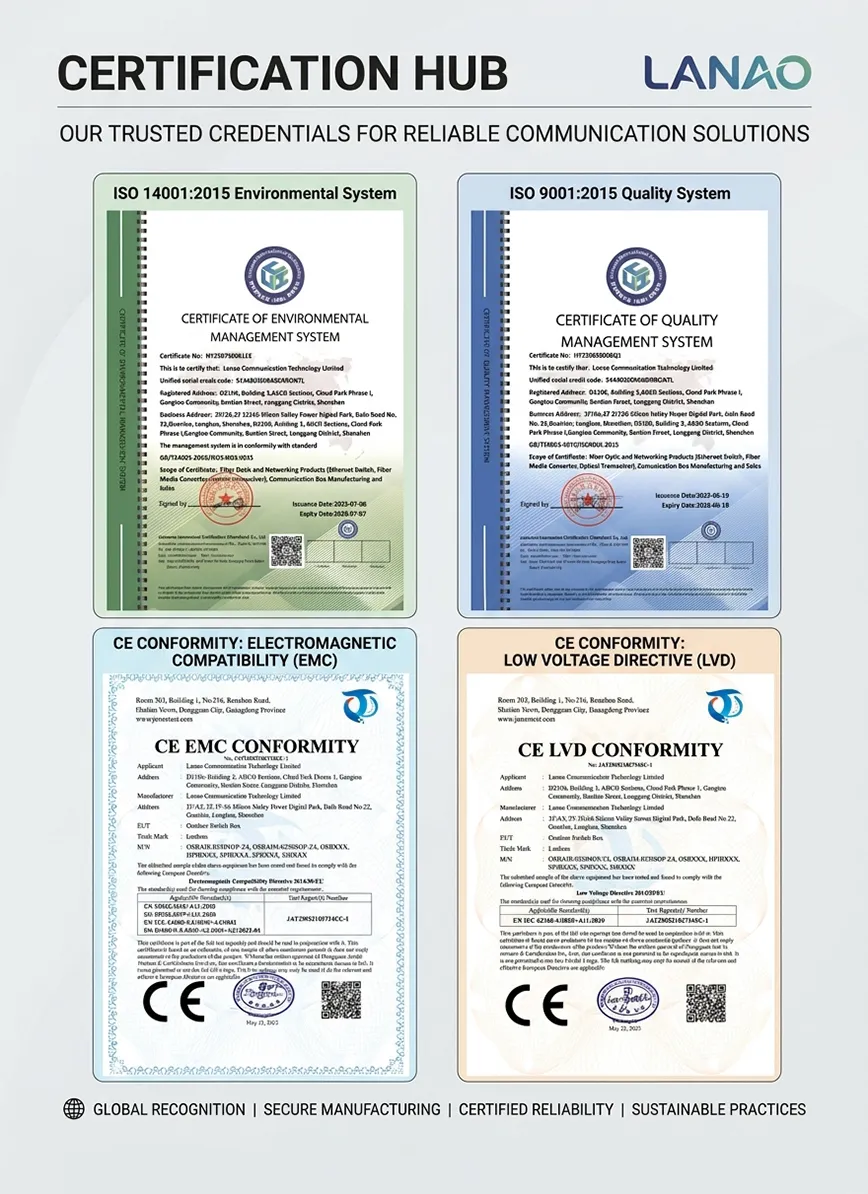
For global network equipment distributors, system integrators, and OEM/ODM buyers, hardware reliability, product flexibility, and supplier support are just as important as software specifications.
Lanaotek provides Ethernet switch solutions for B2B customers, with a focus on OEM/ODM cooperation and application-specific networking requirements.
4.1 Industrial and Enterprise Networking Solutions
Different environments demand different hardware configurations. Buyers should evaluate component selection, thermal design, power protection, port configuration, and environmental specifications according to their deployment needs.
For industrial applications, relevant considerations may include DIN-rail mounting, extended operating temperatures, redundant power inputs, and electromagnetic compatibility.
4.2 Flexible OEM/ODM Customization
For distributors, system integrators, and private-label brands, OEM/ODM services can help align products with specific market requirements.
Potential customization options, subject to model availability and project evaluation, include:
Private-label branding and product appearance
RJ45, SFP, and SFP+ port configurations
Port density and uplink combinations
PoE functionality and power budgets
Industrial housing and mounting options
Firmware, management interface, and feature requirements
4.3 Compatibility and Integration
Reliable deployment requires more than selecting a switch with the right port count. Buyers should confirm interoperability with their existing routers, fiber-optic transceivers, VLAN configurations, network management platforms, and other connected devices.
For fiber access projects, compatibility with specific SFP modules and GPON/XGS-PON equipment should be verified against the relevant interface standards and manufacturer compatibility requirements.
4.4 Support for Global B2B Buyers
A dependable supplier relationship should include clear technical specifications, product selection assistance, customization assessment, and responsive communication throughout the procurement process.
For OEM/ODM projects, buyers should also clarify minimum order quantities, sample availability, lead times, quality-control procedures, warranty terms, and after-sales support before placing an order.
Looking for an Ethernet switch supplier for your next project? Contact Lanaotek to discuss your application, port requirements, routing features, and OEM/ODM customization needs.

5. Frequently Asked Questions (FAQ)
Q1: Can an L2+ managed switch completely replace a Layer 3 core switch?
Answer: Not in every deployment.
An L2+ switch with static routing can handle inter-subnet communication in relatively stable networks. However, it generally does not provide the same dynamic routing capabilities as a full Layer 3 switch.
For large networks that require dynamic route updates, multiple routing paths, or advanced redundancy, a Layer 3 switch with the appropriate protocols may be necessary.
Q2: How Does an L2+ Switch Improve Network Performance Compared with a Standard Layer 2 Switch?
Answer: An L2+ switch can perform inter-VLAN routing locally when the relevant routing features are supported and configured.
In a traditional router-on-a-stick design, inter-VLAN traffic passes through an external router over a shared link, potentially creating a bottleneck. Local routing on an L2+ switch can reduce this dependency and improve traffic efficiency, subject to the switch's forwarding capacity and configuration.
Q3: Why Is Static Routing on L2+ Switches Useful for IP Surveillance Networks?
Answer: IP surveillance systems often separate cameras, recording servers, and control-room equipment into different VLANs or subnets.
An L2+ switch with static routing can enable controlled communication between these subnets while maintaining traffic segmentation. Access-control policies, ACLs, firewall rules, and appropriate security configurations should also be implemented to protect surveillance devices and video streams.
Q4: Does Lanaotek Provide OEM/ODM Customization for L2+ and Layer 3 Switches?
Answer: Lanaotek supports B2B OEM/ODM cooperation for Ethernet switch projects. Available customization options depend on the target product platform and project requirements.
Potential areas for evaluation include hardware configuration, port density, uplink interfaces, PoE power budgets, product branding, and management software requirements.
For specific Layer 3 features—including OSPF, BGP, RIP, and VRRP—buyers should confirm support with Lanaotek for the exact model and firmware version before ordering.
Q5: What Should B2B Buyers Check Before Purchasing Managed Ethernet Switches?
Answer: Before placing an order, evaluate the following factors:
Switching capacity and forwarding rate: Ensure the switch can handle the expected traffic load.
Port configuration: Confirm the required number of Gigabit Ethernet, 10G, or higher-speed interfaces.
Routing requirements: Determine whether static routing is sufficient or dynamic routing is necessary.
PoE requirements: Verify IEEE PoE standards, per-port output, and total power budget where applicable.
Environmental conditions: Check operating temperature, power input, mounting, and protection requirements.
Network management: Review VLAN, QoS, ACL, monitoring, and redundancy features.
Supplier capabilities: Assess customization options, testing procedures, delivery schedules, warranty, and technical support.

Choose the Right Switch for Your Network Architecture
The choice between L2+ and Layer 3 managed switches ultimately depends on network scale, routing complexity, performance requirements, and budget.
Choose L2+ managed switches when you need VLAN segmentation, basic static routing, and cost-effective network access or aggregation.
Choose Layer 3 managed switches when your infrastructure requires dynamic routing, scalable inter-subnet communication, and advanced network redundancy.
For system integrators, distributors, and enterprise network planners, selecting the right switch platform can help balance performance, reliability, scalability, and total cost of ownership.
Explore Lanaotek Ethernet switch solutions and discuss your OEM/ODM requirements with our team to identify a suitable configuration for your next networking project.
By Lanaotek
Lanaotek specializes in translating cutting-edge optical and Ethernet transmission technologies into clear, valuable insights that help our customers stay ahead in a fast-evolving digital world.
By turning complex technical concepts into practical, business-driven content, we aim to empower decision-makers with the knowledge they need to make confident, future-ready choices.
 EN
 fr
 es
 ru
 pt
 ar
 de

 Internet Data Center
 FAQs
 Industry News
 About Us
 Data Center Switch
 Enterprise Switch
 Industrial Switch
 Access Switch
 Integrated Network
 Optical Module & Cable





 Call us on:
 Email Us:
 2106B, #3D, Cloud Park Phase 1, Bantian, Longgang, Shenzhen, 518129, P.R.C.
