Ethernet networks are no longer limited to offices, equipment rooms, and indoor communication cabinets. Security cameras may need to be installed around a building perimeter, wireless access points may be positioned in outdoor areas, and networked equipment may operate across parking lots, campuses, industrial sites, or other exposed locations. Extending Ethernet into these areas introduces a practical challenge: the network equipment itself must be protected from conditions that would not be present inside a controlled environment.
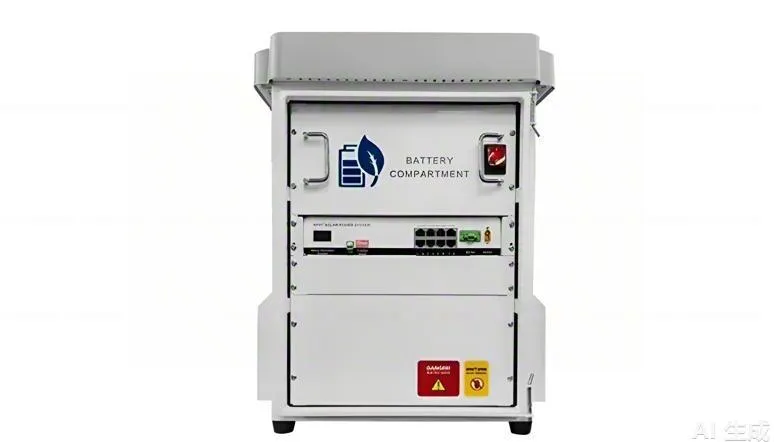
An outdoor switch box provides a way to place Ethernet switching equipment closer to remote devices while providing an enclosure designed for outdoor deployment. For PoE applications, an outdoor box for poe switch can also help integrate a PoE switch into a protected outdoor installation, allowing power and data to reach connected devices through Ethernet cabling. The effectiveness of this approach, however, depends on more than the enclosure alone. Network distance, cable selection, uplink capacity, environmental conditions, and future expansion all need to be considered together.
Extending Ethernet Connectivity to Remote Locations with an Outdoor Switch Box
The main advantage of an outdoor switch box is that it allows the switching point to move closer to where network devices are actually installed. Instead of bringing every remote Ethernet connection back to an indoor network room, a switch can be positioned at a suitable outdoor location and connected to the main network through an uplink.
This arrangement can simplify cabling in applications where devices are distributed across a relatively large site. A surveillance camera installation, for example, may include cameras around the perimeter of a warehouse or industrial facility. Wireless access points may also be positioned in outdoor work areas where a direct connection to the nearest indoor switch would require unnecessarily long cable routes.
By locating the switch closer to these endpoints, the network can be divided into more manageable sections. The indoor network remains responsible for the main distribution layer, while the outdoor switch handles local connections. This does not eliminate the need for careful network planning, but it can make the physical topology easier to manage.
The enclosure becomes particularly important because an ordinary indoor switch cabinet is not necessarily designed to protect equipment from rain, dust, temperature changes, condensation, or direct environmental exposure. An outdoor switch box should therefore be selected according to the actual installation environment rather than simply treated as a weatherproof container.
Key Network Distance, Bandwidth, and Port Speed Considerations for Outdoor Ethernet
Distance is one of the first technical factors to check when extending Ethernet outdoors. Standard copper Ethernet cabling commonly uses a maximum channel length of about 100 meters in conventional structured cabling designs, although the actual installation must account for the cable type, connectors, intermediate components, and applicable Ethernet standard. When a remote device is farther away than the practical copper segment allows, designers may need to consider fiber or an intermediate switching point.
This is where an outdoor switch box can become useful. Rather than attempting to run every copper connection from an indoor switch to distant endpoints, the network can use a suitable uplink to reach the outdoor switching location and then distribute Ethernet connections locally.
Bandwidth needs should also be evaluated before choosing the switch. A single basic access point and a high-resolution surveillance camera do not necessarily create the same traffic load. When multiple cameras, wireless access points, sensors, or other devices connect to the same outdoor switch, their combined traffic determines how much capacity the uplink needs to provide.
| Network Factor | Why It Matters | Planning Consideration |
|---|
| Ethernet distance | Long cable runs can exceed the practical range of copper Ethernet | Check the complete cable path and consider fiber for longer links |
| Port speed | Determines the bandwidth available to each connected device | Match the port speed to cameras, access points, and other endpoints |
| Uplink capacity | Carries aggregated traffic between the outdoor and main network | Consider the combined traffic from all connected devices |
| Port count | Determines how many local devices can be connected | Allow enough capacity for current connections and reasonable expansion |
| Environmental protection | Protects network equipment from outdoor conditions | Match enclosure protection to the actual installation environment |
Port speed should therefore be considered in relation to the complete topology. A high-speed port on the access side does not solve a capacity problem if the uplink connecting the outdoor switch to the core network is undersized. Conversely, installing excessive bandwidth where connected devices have relatively modest requirements may increase system cost without providing a practical benefit.
PoE Connectivity for Outdoor Cameras, Access Points, and Other Network Devices
Power delivery becomes another important consideration when Ethernet is extended outdoors. Many outdoor network devices, including IP cameras, wireless access points, intercom systems, and certain IoT devices, can receive both data and electrical power through Ethernet using Power over Ethernet technology.
This can simplify installation because a separate local power connection is not necessarily required at every endpoint. A PoE-capable switch can supply power through the network cable while also providing the data connection. In an outdoor deployment, however, the power requirements of all connected devices need to be considered together.
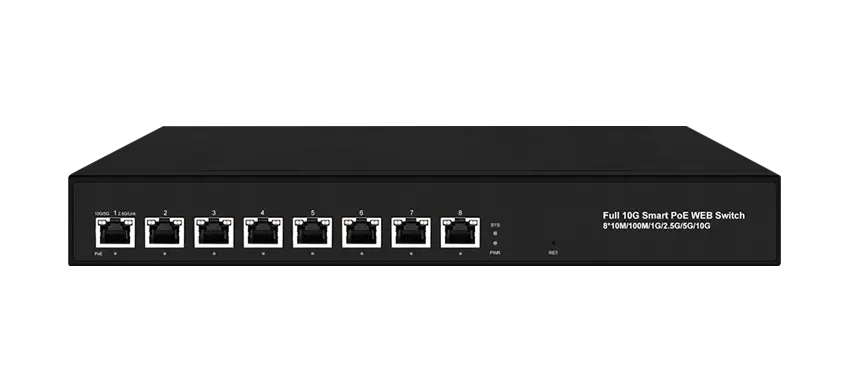
An outdoor box for poe switch can provide a protected location for the PoE switching equipment while keeping cable runs to outdoor endpoints relatively short. This can be particularly practical for camera systems where several devices are concentrated within the same outdoor area.
PoE planning should include the power requirements of connected devices as well as the switch's available PoE budget. Cameras with additional functions, such as illumination or mechanical movement, may require more power than basic fixed cameras. Outdoor access points can also have different power requirements depending on their capabilities and configuration.
Environmental conditions should not be overlooked. An enclosure that houses a PoE switch must provide suitable protection while also allowing the equipment's heat to be managed appropriately. Simply placing a powered switch inside a sealed box without considering thermal conditions can create an avoidable reliability problem.
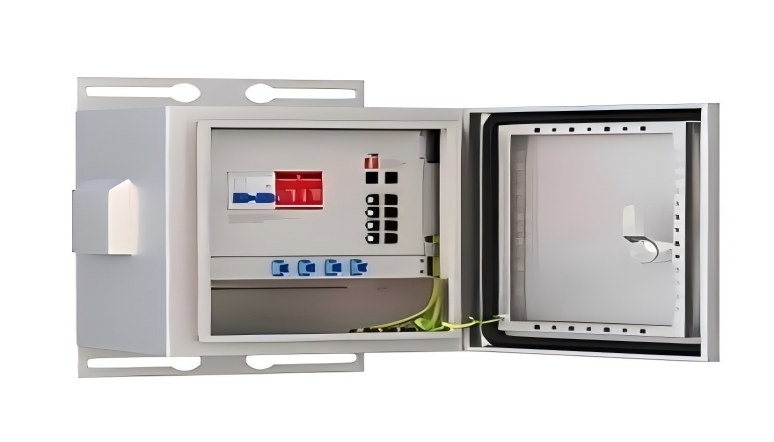
Ethernet Cabling and Uplink Planning for Outdoor Switch Box Deployments
The physical cabling strategy often determines whether an outdoor switching design remains simple or becomes difficult to maintain. The connection between the indoor network and the outdoor switch is especially important because it carries the combined traffic generated by the remote devices.
For relatively short connections, copper Ethernet may be appropriate when the cable route and environmental protection meet the requirements of the installation. For longer distances or locations where electrical isolation is desirable, fiber can provide a different approach to the uplink. The appropriate choice depends on distance, bandwidth, installation conditions, and the architecture of the existing network.
The outdoor cable route also deserves attention. Ethernet cable exposed to sunlight, moisture, temperature changes, physical impact, or other environmental stresses should be appropriate for the installation. Cable entry points into the enclosure should be planned so that the enclosure's environmental protection is not compromised by poorly sealed connections.
It is also worth considering serviceability. An outdoor switch box may be technically suitable but inconvenient if technicians cannot easily access the equipment for inspection or replacement. The enclosure location, mounting method, cable routing, and internal layout should all support practical maintenance.
For projects where enclosure design, Ethernet switching, and network integration need to work together, reviewing the available LanaoTek networking products can help integrators compare the equipment options with the requirements of the intended installation.
Outdoor Switch Boxes in Distributed and Expanding Ethernet Network Architectures
An outdoor switch box becomes even more useful when an Ethernet network is distributed across several locations rather than concentrated in one building. Campuses, industrial facilities, transportation sites, commercial properties, and large outdoor security systems may all require network connections at locations that are physically separated from the main equipment room.
In such architectures, each outdoor switching point can serve a local group of endpoints while maintaining an uplink to the wider network. This creates a modular structure that can be expanded as additional devices are introduced. A new group of cameras, for instance, may be connected to a nearby outdoor switch without requiring every new cable to run directly back to the central equipment room.
The same concept applies to outdoor wireless networks. Instead of placing long Ethernet runs between an indoor switch and every access point, a distributed switching arrangement can bring the network closer to the areas requiring wireless coverage. Where PoE is involved, an outdoor box for poe switch can combine local switching and power delivery within a protected installation point.
Scalability should still be planned carefully. The number of available ports, uplink bandwidth, PoE capacity, power requirements, and physical space inside the enclosure can all influence how easily another device can be added later. Leaving some practical expansion capacity is usually more effective than designing an installation that is already operating at its physical limits on day one.
For a project with unusual distances, port requirements, or outdoor deployment conditions, it can also be useful to discuss the network configuration before equipment is finalized. LanaoTek's technical team can be contacted for application-specific requirements, particularly when the outdoor switching equipment needs to fit into a broader network architecture.
Conclusion
Extending Ethernet beyond indoor spaces requires more than placing a network switch outdoors. The switch, enclosure, cabling, uplink, PoE system, and physical environment all need to work together. An outdoor switch box provides a practical way to bring switching closer to remote network devices, while an outdoor box for poe switch can simplify deployments where cameras, access points, and other PoE equipment need both power and data connectivity.
The most effective design starts with the actual network topology. Cable distance, aggregate bandwidth, port speed, uplink capacity, environmental exposure, and future expansion should be considered before the equipment is selected. With those requirements clearly defined, outdoor Ethernet can become a structured extension of the main network rather than a collection of isolated remote connections.
FAQs
1. What is an outdoor switch box used for?
An outdoor switch box provides a protected installation location for Ethernet switching equipment used outside conventional indoor network spaces. It can connect cameras, access points, sensors, and other outdoor network devices.
2. What is an outdoor box for a PoE switch?
An outdoor box for poe switch is an enclosure designed to house a PoE switch in an outdoor installation while helping protect the equipment from applicable environmental conditions.
3. How far can Ethernet run outdoors?
Conventional copper Ethernet structured cabling commonly uses a 100-meter channel limit. Longer installations may require fiber, an intermediate switch, or another appropriate network architecture.
4. Can an outdoor switch box support outdoor cameras?
Yes. When paired with a suitable PoE switch, an outdoor switch box can support IP cameras by providing both Ethernet connectivity and power over the network cable.
5. Why is uplink capacity important in an outdoor Ethernet network?
The uplink carries the combined traffic from devices connected to the outdoor switch. If its capacity is insufficient, it can become a bottleneck even when individual access ports provide adequate bandwidth.
6. What should be considered when selecting an outdoor switch box?
Consider the switch and PoE requirements, environmental protection, cable routing, uplink type, port count, bandwidth, heat management, installation location, maintenance access, and future expansion needs.
By Lanbras
Lanbras specializes in translating cutting-edge optical and Ethernet transmission technologies into clear, valuable insights that help our customers stay ahead in a fast-evolving digital world.
By turning complex technical concepts into practical, business-driven content, we aim to empower decision-makers with the knowledge they need to make confident, future-ready choices.
 EN
EN
 fr
fr  es
es  ru
ru  pt
pt  ar
ar  de
de 
 Internet Data Center
 FAQs
FAQs Industry News
 About Us
 Data Center Switch
  Enterprise Switch
  Industrial Switch
  Access Switch
  Integrated Network
  Optical Module & Cable

 Call us on:
  Email Us:
  2106B, #3D, Cloud Park Phase 1, Bantian, Longgang, Shenzhen, 518129, P.R.C.