Best Industrial Grade 4-Port, 5-Port, 8-Port, 16-Port, 24-Port and 48-Port Switches for the Oil and Gas Industry | Why Choose Lanaotek?
oil and gas industry relies on dependable industrial communication networks for refineries, petrochemical plants, pipeline monitoring, offshore facilities, gas processing stations, and industrial security systems. Selecting the best industrial-grade Ethernet switch requires careful consideration of environmental conditions, port density, Power over Ethernet (PoE), fiber uplinks, network management, redundancy, and long-term supply.
Lanaotek, operated by Lanao Communication Technology Limited in Shenzhen, China, provides industrial Ethernet switches, PoE switches, managed network switches, and OEM/ODM networking solutions for global B2B customers. Its industrial portfolio includes DIN-rail and rackmount switches designed for demanding industrial applications.
2. Which Port Configuration Is Best?
Different oil and gas projects require different network architectures. The best choice depends on connected devices, expansion plans, and installation conditions.
4-Port Industrial Ethernet Switch: Suitable for compact monitoring cabinets, remote sensors, small control systems, and limited-device installations. A 4-port industrial PoE switch can connect compatible IP cameras or other powered devices.
5-Port Industrial Switch: Appropriate for small, straightforward networks requiring a few Ethernet connections. Confirm whether the selected model is managed or unmanaged and whether PoE is supported.
8-Port Industrial Ethernet Switch: A practical choice for small control rooms, equipment cabinets, local surveillance networks, and distributed industrial automation.
16-Port Industrial Switch: Suitable for medium-sized monitoring systems, industrial control networks, and multiple connected devices across a production area.
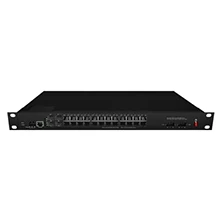
24-Port Industrial Ethernet Switch: Ideal for larger surveillance deployments, refinery network cabinets, and industrial access networks requiring additional connectivity and fiber uplinks.
48-Port Industrial Switch: Best considered for high-density aggregation, centralized industrial network cabinets, and larger facilities with numerous connected devices.
Lanaotek offers industrial switch configurations across several port densities, including 4-port, 8-port, 16-port, 24-port, and 48-port options. Buyers should verify the exact model, uplink interfaces, power requirements, and operating specifications before purchasing.
3. PoE + Port + Application: Build the Right Network
PoE technology transmits data and electrical power over compatible Ethernet cabling, helping simplify installations for IP surveillance cameras, wireless access points, and other supported devices.
For small remote monitoring stations, 4-port or 5-port PoE switches can reduce installation complexity. Eight-port and 16-port PoE switches can support larger camera deployments and distributed monitoring systems. Twenty-four-port and 48-port switches can accommodate higher device density, subject to available PoE power budgets and network design.
For oil and gas projects, buyers should assess PoE standards, total power budget, maximum power per port, fiber uplink capacity, redundancy, and environmental ratings. PoE is not automatically required for every industrial device; PLCs, controllers, and sensors may need separate power supplies.
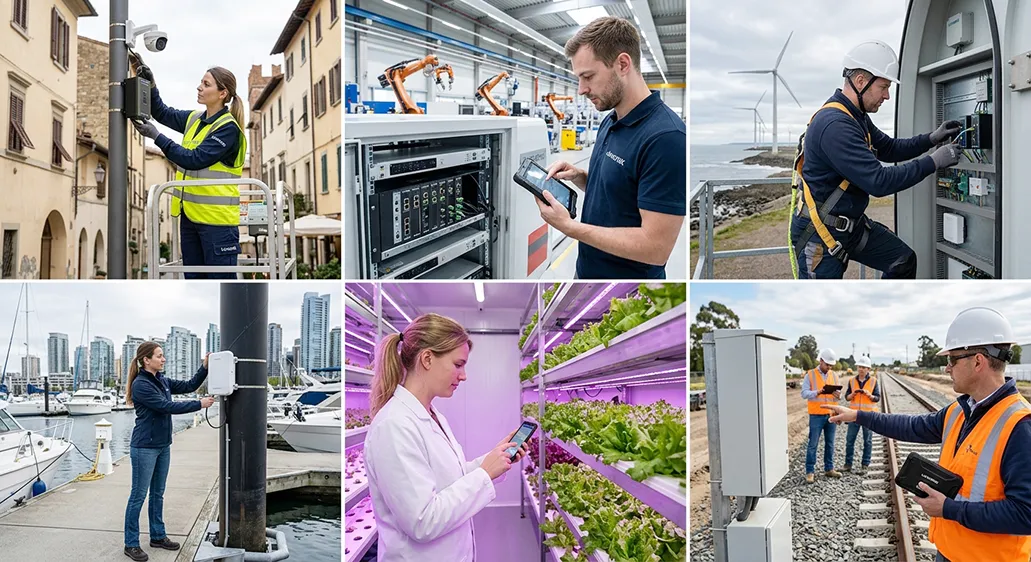
4. Industrial Applications Energy Sector
Lanaotek industrial Ethernet switches can support network infrastructure for:
Oil refineries and petrochemical production facilities.
Pipeline monitoring and remote equipment stations.
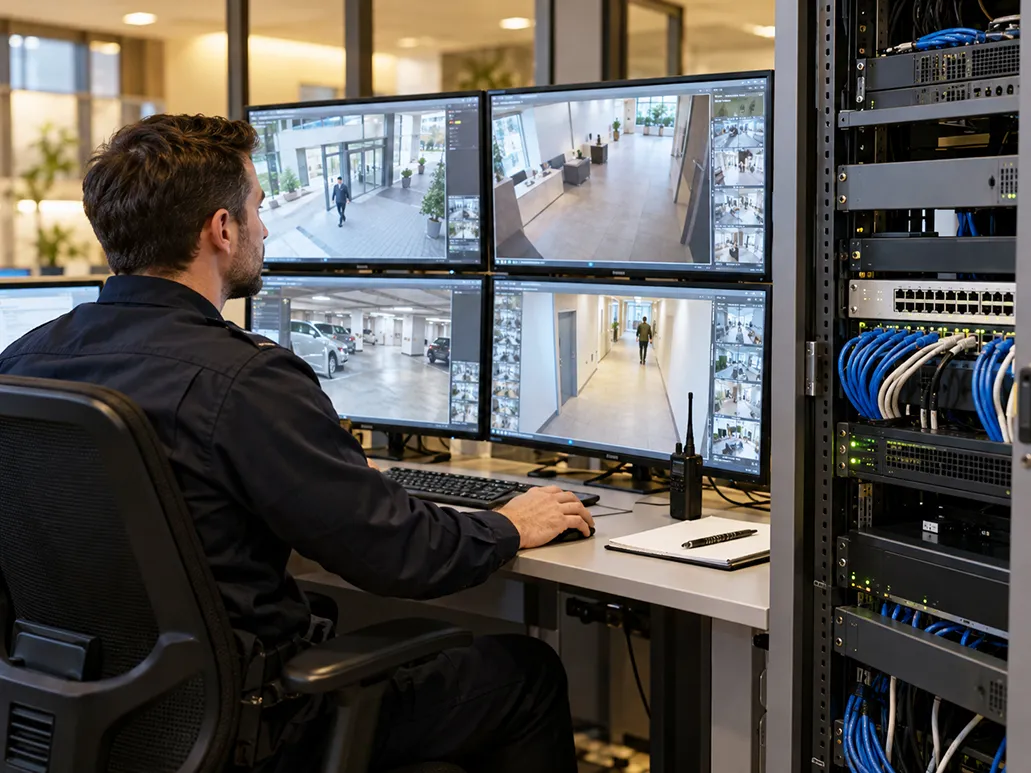
Industrial IP surveillance and perimeter security.
Power distribution, utilities, and energy infrastructure.
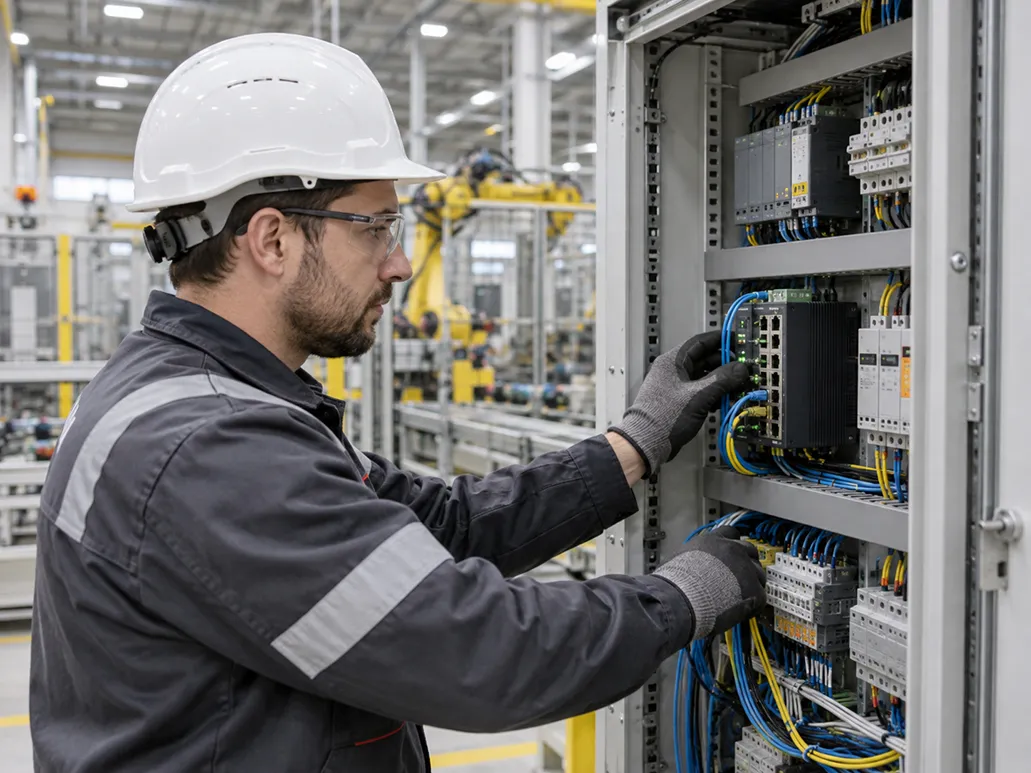
Industrial automation, control rooms, and equipment monitoring.
Fiber-connected networks across large industrial sites.
For demanding installations, selected Lanaotek models offer features such as wide operating-temperature ranges, redundant power inputs, managed networking, and fiber connectivity. However, equipment used in hazardous areas must meet the specific explosion-protection and hazardous-location requirements of the installation. A standard industrial switch should not be assumed safe for installation inside a classified explosive atmosphere.
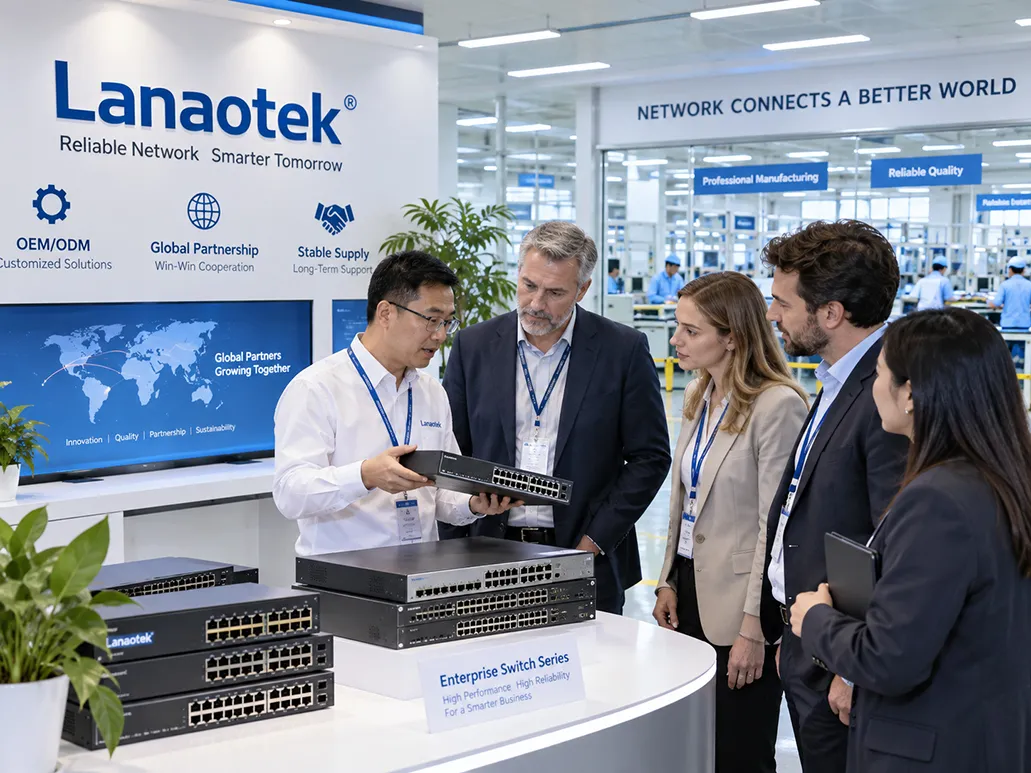
5. Why Choose Lanaotek as Your Industrial Switch Manufacturer?
Lanaotek combines industrial Ethernet networking expertise with a broad product portfolio covering industrial switches, PoE switches, enterprise switches, optical modules, and related connectivity products.
Its advantages for B2B buyers include:
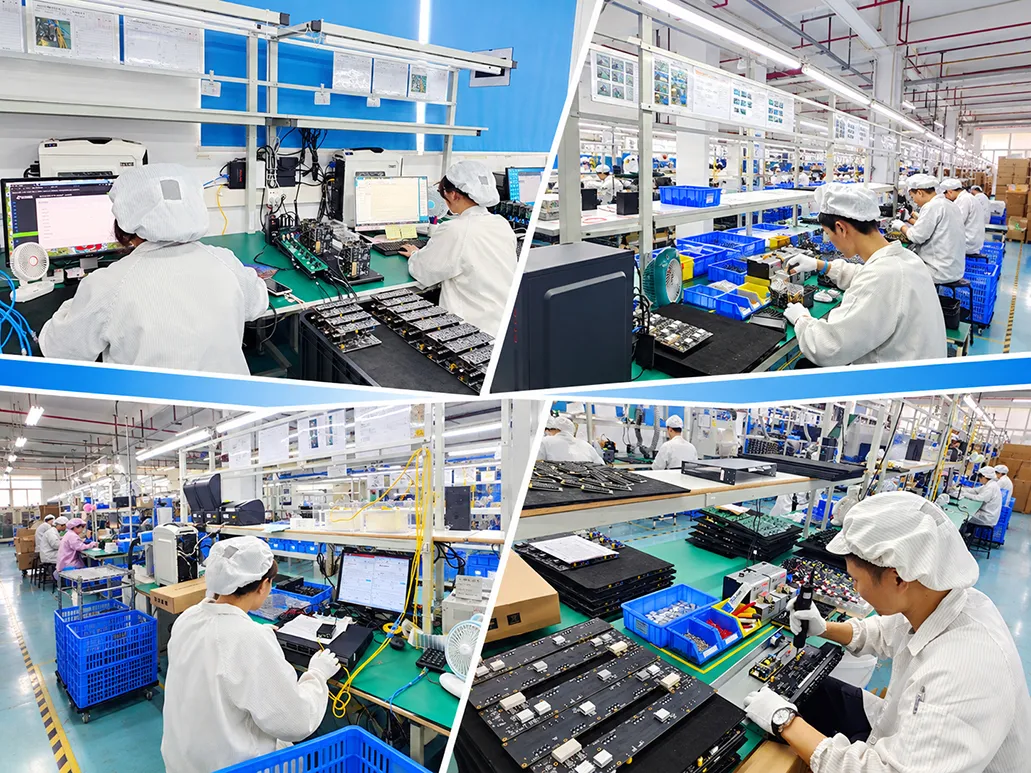
Manufacturing and product selection: Access to different switch configurations for industrial, enterprise, and infrastructure projects.
OEM/ODM customization: Product branding, hardware configuration, enclosure design, and firmware requirements can be discussed according to project feasibility.
One-stop networking solutions: Customers can coordinate industrial switches, PoE networking, fiber connectivity, and related products through one supplier.
Flexible B2B cooperation: Distributors, system integrators, OEMs, ODMs, telecom operators, ISPs, enterprise buyers, and project contractors can explore solutions tailored to their requirements.
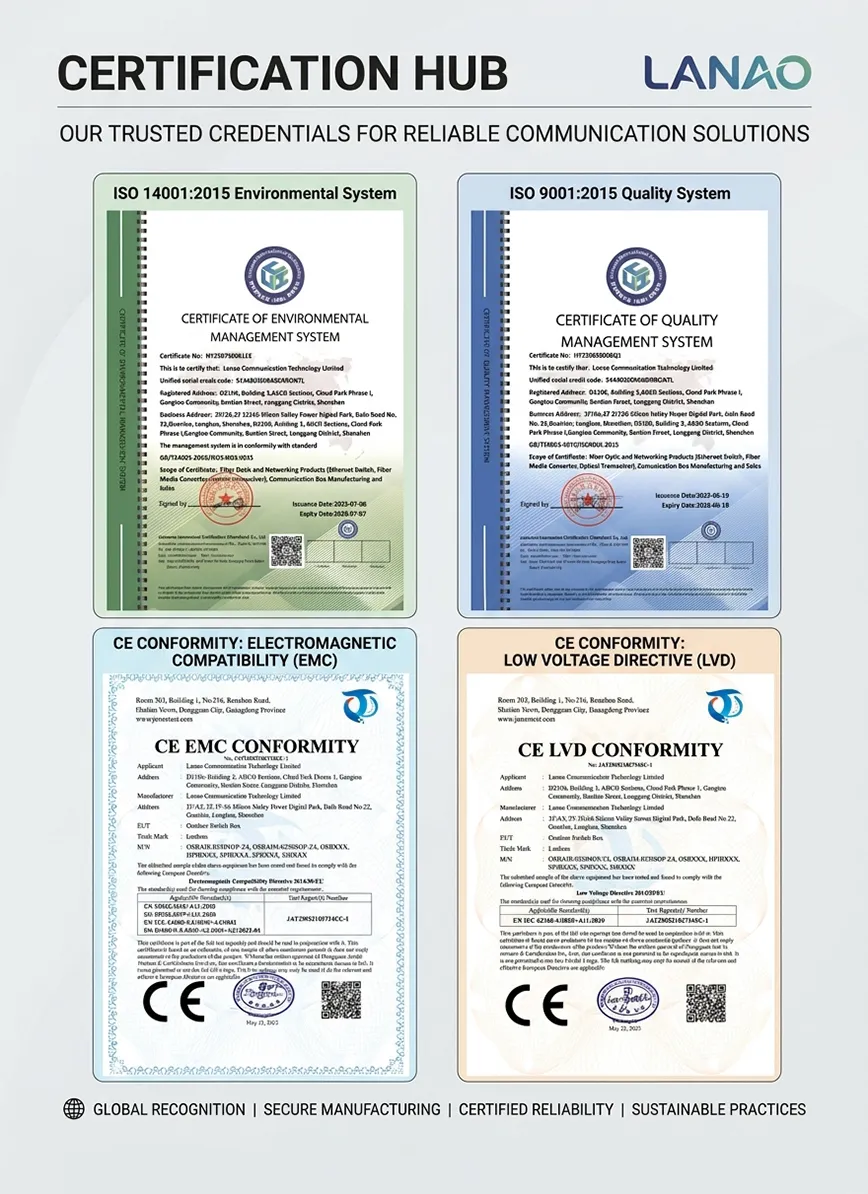
Lanaotek positions itself as a professional Chinese Ethernet switch manufacturer and OEM/ODM partner. Any claim about a specific industry ranking or global brand position should be supported by verifiable independent evidence.

6. Global OEM/ODM Solutions for B2B Customers
Although this article focuses on India, Lanaotek serves broader international B2B markets, including the USA, Germany, the UK, Australia, Canada, Europe, the Middle East, Southeast Asia, and other global markets.
Whether you need a compact industrial PoE switch, a managed DIN-rail switch, a 24-port rackmount solution, a 48-port network switch, or customized OEM/ODM products, Lanaotek can help evaluate suitable configurations for your application.
Before ordering, provide the required port count, PoE budget, uplink speed, temperature range, mounting method, redundancy requirements, management functions, and any hazardous-area compliance requirements.

Contact Lanaotek to discuss your industrial Ethernet switch requirements and request a tailored B2B solution.
Lanaotek — Your Industrial Ethernet Switch, Network Switch, and OEM/ODM Solution Partner.
Q1: What are the most critical factors to consider when choosing an enterprise switch in 2026-2027 ?
A: Unlike a few years ago, when port speed was the sole consideration, selecting a switch in 2026-2027 ires a comprehensive evaluation of the following points: Application scenarios, port speed and media, PoE power budget, AI readiness features, management and automation, scalability.
Q2: Can commercial switches be used in industrial settings to save costs?
A: It is not recommended. Commercial switches lack the surge protection, vibration resistance, and wide temperature tolerance required for factory floors. The cost of one hour of network downtime usually exceeds the “savings” from buying a commercial-grade switch.
Q3:What is the importance of a fanless design in an industrial switch?
A: ans are mechanical parts prone to failure due to dust ingestion and bearing wear. A fanless design uses passive cooling, which significantly increases the lifespan of the device and allows for sealed enclosures (higher IP ratings) that protect against contaminants.
Q4: The term “lossless Ethernet” is often mentioned in switch specifications, “PFC” 、 “ECN”. What’s the use of it?
A: FC (Priority Flow Control) is equivalent to opening up a dedicated channel for AI data flow. When this channel is blocked, only the flow on this channel needs to be paused separately. This does not affect other lanes, ensuring no packet loss.
Q5: I have seen many models that support stacking and VXLAN. What method should be used to expand the network?
A: The problems and application scales solved by the two are different:
Switch stacking (or virtual chassis) virtualizes multiple physical switches into a logical device for management through dedicated stacking cables. It simplifies management, enhances port density, and local high availability, making it suitable for simplifying access layers in the same data center or on the same floor.
VXLAN/EVPN is the core technology of modern large-scale networks. It extends the second-layer network across the third-layer IP network via tunnels, allowing you to cross different buildings, cities, and even data centers and build a logically interconnected, large-scale second-layer domain. This is the cornerstone of building large-scale, multi-active data centers and flexible campus networks.
Many mid- to high-end switches now support both technologies simultaneously. You can simplify local operations and maintenance with stacking at the access layer, and build resilient overlay networks with VXLAN at the core/aggregation layer.
By Lanaotek
Lanaotek specializes in translating cutting-edge optical and Ethernet transmission technologies into clear, valuable insights that help our customers stay ahead in a fast-evolving digital world.
By turning complex technical concepts into practical, business-driven content, we aim to empower decision-makers with the knowledge they need to make confident, future-ready choices.
 EN
 fr
 es
 ru
 pt
 ar
 de

 Internet Data Center
 FAQs
 Industry News
 About Us
 Data Center Switch
 Enterprise Switch
 Industrial Switch
 Access Switch
 Integrated Network
 Optical Module & Cable




 Call us on:
 Email Us:
 2106B, #3D, Cloud Park Phase 1, Bantian, Longgang, Shenzhen, 518129, P.R.C.
