Industrial networks are fundamentally different from conventional office networks.
In a factory, transportation system, energy facility, or outdoor infrastructure project, network equipment may need to operate continuously under temperature fluctuations, vibration, electromagnetic interference, humidity, power instability, and other demanding conditions.
For this reason, selecting an industrial Ethernet switch should involve more than comparing the number of ports or Ethernet speed.
A suitable industrial switch needs to match the environment, network architecture, bandwidth requirements, redundancy strategy, power requirements, and future expansion plan.
This guide explains the key factors engineers, system integrators, distributors, and industrial network buyers should evaluate before selecting an industrial Ethernet switch.
What Is an Industrial Ethernet Switch?
An industrial Ethernet switch is a networking device designed for industrial environments where standard commercial Ethernet equipment may not provide the required environmental or operational characteristics.
Depending on the model, industrial Ethernet switches can be deployed in:
· Factory automation
· Industrial control systems
· Transportation networks
· Railway infrastructure
· Energy and power systems
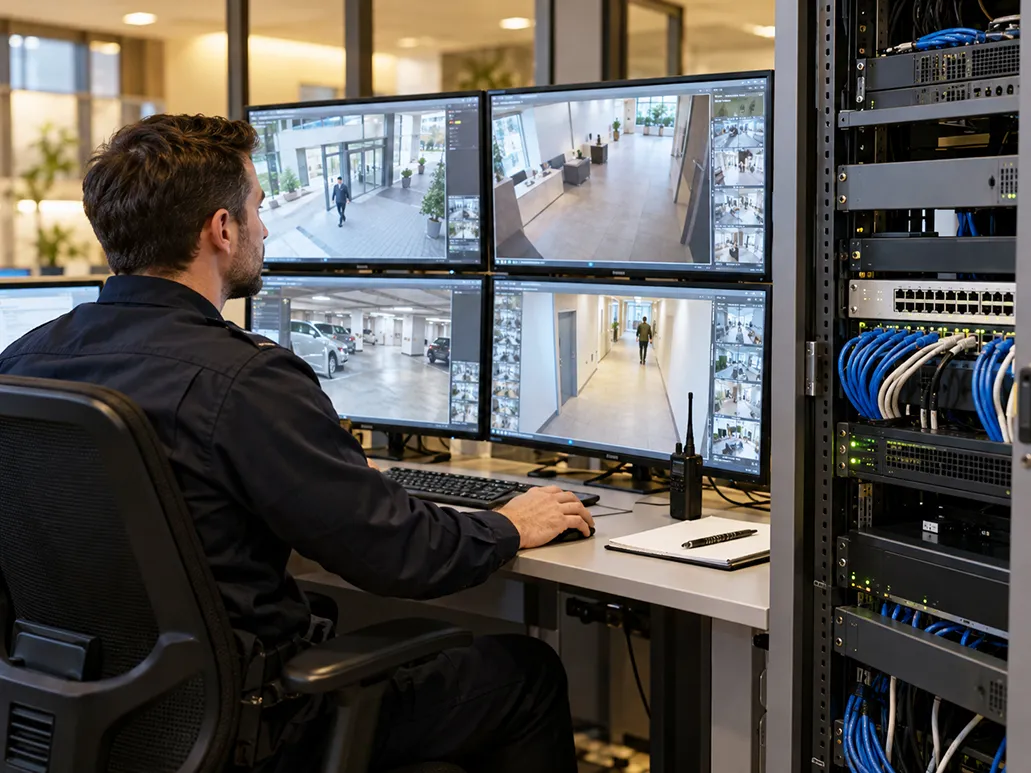
· Surveillance systems
· Smart cities
· Outdoor communication infrastructure
· Oil and gas facilities
· IoT and edge computing environments
Industrial switches may be available in managed, unmanaged, Web Smart, PoE, DIN-rail, and rackmount configurations.
The appropriate configuration depends on the application and network architecture.
Why Is Industrial Network Equipment Different?
The biggest difference is the operating environment.
A conventional office switch may be installed inside a temperature-controlled server room.
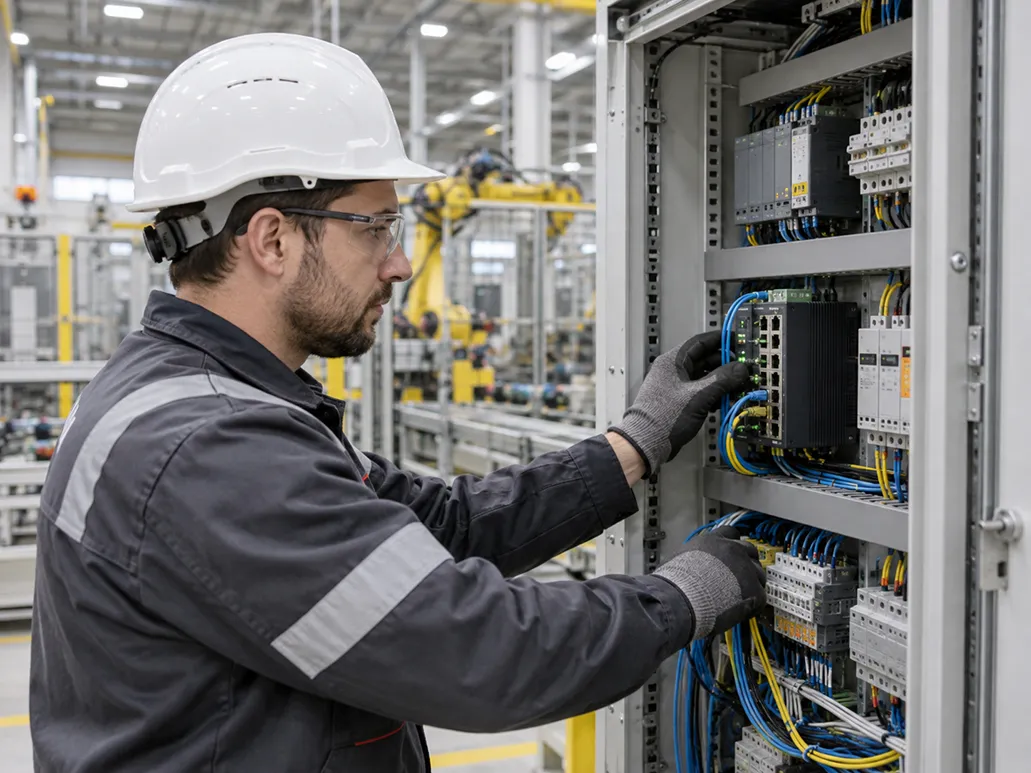
An industrial switch may instead be installed inside a factory cabinet, roadside enclosure, transportation facility, or other location where environmental conditions are less predictable.
Important factors can include:
Operating Temperature
Industrial equipment may need to operate across a wider temperature range than standard commercial networking equipment.
The required temperature range should be confirmed against the actual deployment environment and the specific switch model.
Vibration
Industrial automation and transportation environments may expose network equipment to continuous mechanical vibration.
Mechanical design and component selection therefore become important considerations.
Electromagnetic Interference
Industrial machinery, motors, power equipment, and electrical systems can generate electromagnetic interference.
Network equipment should therefore be evaluated according to the electromagnetic environment in which it will operate.
Humidity and Environmental Conditions
For certain installations, humidity and environmental exposure may also affect equipment reliability.
The enclosure, installation location, and environmental specifications should be reviewed before deployment.
DIN-Rail or Rackmount Industrial Switch?
The physical installation method is another important consideration.
DIN-Rail Industrial Ethernet Switch
DIN-rail switches are commonly used inside industrial control cabinets and distributed automation systems.
They can be suitable for:
· Factory automation
· PLC networks
· Industrial control cabinets
· Transportation systems
· Energy infrastructure
· Edge networking
The compact DIN-rail form factor can simplify installation where rack space is unavailable.
Rackmount Industrial Ethernet Switch
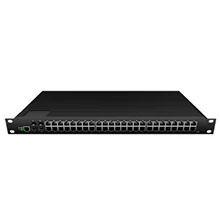
Rackmount industrial switches are generally more suitable for centralized network locations.
They may be deployed in:
· Industrial server rooms
· Communication cabinets
· Control centers
· Transportation hubs
· Energy facilities
· Large-scale industrial networks
Lanaotek’s current industrial portfolio includes both DIN-rail and rackmount L2/L3 managed switches, as well as industrial PoE products.
The choice should therefore be based on the physical installation environment and network architecture.
Managed or Unmanaged Industrial Ethernet Switch?
This is one of the most important decisions during industrial network planning.
Unmanaged Switch
An unmanaged switch generally provides simple Ethernet connectivity without requiring extensive configuration.
It may be suitable for relatively straightforward networks where advanced traffic management is not required.
Typical applications can include:
· Simple machine networking
· Small industrial networks
· Basic device connectivity
· Non-critical edge applications
Managed Switch
A managed industrial switch provides greater control over network traffic and configuration.
Depending on the model, features may include:
· VLAN
· QoS
· Network redundancy
· Traffic management
· Port monitoring
· Layer 2 switching
· Layer 3 routing
· Security functions
· Remote management
For larger or mission-critical industrial networks, managed switches can provide additional control and visibility.
Lanaotek’s industrial range includes L2/L3 managed switches with features such as VLAN, QoS and redundancy functions.
How Many Ethernet Ports Do You Need?
Port count should be determined by the number of connected devices and the network topology.
Consider:
· PLCs
· Industrial PCs
· Sensors
· IP cameras
· Access points
· Controllers
· HMIs
· Servers
· Uplinks
· Redundant network connections
However, it is generally advisable to consider future expansion rather than designing the network around today’s exact port requirements.
For example, if a control cabinet currently requires eight Ethernet connections, selecting a switch with additional available ports may provide useful capacity for future devices.
The final decision should balance port density, physical space, bandwidth, power consumption, and expansion requirements.
Does the Industrial Switch Need PoE?
Power over Ethernet can simplify industrial deployments by allowing compatible devices to receive both power and network connectivity over Ethernet cabling.
PoE can be useful for:
· IP cameras
· Wireless access points
· Industrial IoT devices
· VoIP equipment
· Edge devices
However, buyers should not evaluate PoE simply by asking whether a switch “supports PoE.”
The following should also be confirmed:
· PoE standard
· Power per port
· Total PoE power budget
· Number of powered devices
· Cable distance
· Device startup power
· Environmental conditions
For example, a network with several high-power endpoints may require a substantially different PoE budget from a small surveillance installation.
Lanaotek’s access networking portfolio includes multiple PoE configurations, including Gigabit PoE, multi-gigabit PoE and higher-power PoE solutions.
What Network Speed Does an Industrial Application Need?
Industrial Ethernet networks can operate at different speeds depending on the application.
Common configurations include:
· 100 Mbps
· 1 Gbps
· 2.5 Gbps
· 10 Gbps
· Higher-speed optical uplinks
The edge device speed and uplink speed do not necessarily need to be identical.
For example, an industrial network could use Gigabit copper ports for local devices while using 10G SFP+ uplinks to connect aggregation or backbone equipment.
Lanaotek currently lists industrial configurations combining Gigabit RJ45 ports with 10G SFP+ uplinks.
The important consideration is whether the network architecture provides sufficient bandwidth between different layers.
How Important Is Network Redundancy?
In some industrial applications, network downtime can interrupt production or affect critical infrastructure.
Network redundancy can therefore become an important design consideration.
Depending on the product and architecture, industrial switches may support redundancy mechanisms such as:
· ERPS
· RSTP
· MSTP
· Dual power inputs
· Ring topology
· Redundant uplinks
The appropriate redundancy mechanism depends on the network topology and application requirements.
For example, a ring architecture may be useful in distributed industrial networks where maintaining connectivity after a link failure is important.
Lanaotek’s industrial L2/L3 switch portfolio includes models supporting redundancy-related functions such as ERPS and MSTP, subject to model confirmation.
Copper or Fiber Uplink?
The choice between copper and fiber should be based on distance, electromagnetic environment, bandwidth and existing infrastructure.
Copper Ethernet
Copper can be practical for short-distance connections and common industrial devices.
Advantages may include:
· Familiar installation
· Convenient device connectivity
· Broad equipment availability
Fiber Ethernet
Fiber can be advantageous for longer-distance communication and environments with significant electromagnetic interference.
It can also provide high-bandwidth connectivity between network segments.
Industrial switches with SFP or SFP+ ports can provide flexibility by allowing the network designer to select appropriate optical transceivers according to distance and fiber type.
How Do You Select the Right Optical Transceiver?
When fiber connectivity is involved, the switch and optical transceiver should be evaluated as a complete system.
Important parameters include:
· Data rate
· SFP/SFP+/SFP28/QSFP form factor
· Wavelength
· Transmission distance
· Single-mode or multimode fiber
· Connector type
· Operating temperature
· Host equipment compatibility
For industrial applications, operating temperature can be particularly important.
A transceiver suitable for a controlled data center environment may not necessarily be the right choice for a demanding industrial deployment.
Compatibility should therefore be confirmed according to the exact switch model and transceiver specification.
Should You Choose L2 or L3 Industrial Switching?
The required network layer functionality depends on the network architecture.
Layer 2
L2 switching can be sufficient for many edge networks where the primary requirement is Ethernet connectivity and VLAN-based segmentation.
Layer 3
L3 switching becomes more relevant when the network requires routing between different subnets or more advanced network architecture.
Potential requirements may include:
· Static routing
· Dynamic routing
· Inter-VLAN routing
· Network segmentation
· Traffic management
For larger industrial networks, L3 capabilities can provide additional architectural flexibility.
However, the correct choice should be based on actual network requirements rather than selecting additional functionality simply because it is available.
What About Cybersecurity?
Industrial networks are increasingly connected to enterprise networks, cloud platforms, remote management systems, and IoT devices.
As a result, cybersecurity should be considered during network design.
Depending on the model, relevant capabilities may include:
· VLAN segmentation
· ACL
· Access control
· Secure management
· Traffic filtering
· Network monitoring
Security requirements should be evaluated together with the overall industrial network architecture.
A switch alone cannot provide complete industrial cybersecurity; it should form part of a broader security strategy.
What Should You Check Before Buying?
Before requesting a quotation, prepare the following information:
Application
What environment will the switch operate in?
Installation
DIN-rail, rackmount, cabinet, or other installation method?
Ports
How many copper and fiber ports are required?
Speed
100M, 1G, 2.5G, 10G, or higher?
PoE
Is PoE required? If yes, how many devices and what power budget?
Uplinks
What uplink speed and fiber type are required?
Temperature
What is the actual operating temperature range?
Redundancy
Is ring redundancy or redundant power required?
Management
Is unmanaged, Web Smart, L2, L2+, or L3 functionality required?
Existing Equipment
What switch, router, PLC, camera, server, or optical transceiver models are already deployed?
Providing these details allows a supplier or system integrator to evaluate the application more accurately.
Industrial Ethernet Switch Selection Checklist
Before finalizing a model, evaluate:
Environment
· Temperature
· Humidity
· Vibration
· EMI
Hardware
· Port count
· Port speed
· Uplink interfaces
· DIN-rail/rackmount
· Power supply
Network
· L2/L3
· VLAN
· QoS
· Routing
· Redundancy
· Security
PoE
· PoE standard
· Power per port
· Total power budget
Optical
· Fiber type
· Distance
· Wavelength
· Transceiver compatibility
Lifecycle
· Future expansion
· Technical support
· Warranty
· Spare parts
· Product availability
Choosing a Network Supplier for Industrial Projects
For industrial networking projects, the supplier’s technical capability can be as important as the product itself.
A project may require more than a standard product catalog.
System integrators and industrial customers may need:
Technical consultation → Product selection → Compatibility verification → Sample testing → Configuration → Deployment support → After-sales technical assistance
Lanaotek currently provides industrial Ethernet switches across DIN-rail and rackmount configurations, including managed, unmanaged, PoE and optical networking products. Its broader portfolio also covers enterprise, data center, access networking and optical modules/cables.
This broader product range can be relevant when a project requires multiple networking layers rather than a single switch model.
Conclusion
Selecting an industrial Ethernet switch should not begin with the question:
“Which switch has the most ports?”
A better starting point is:
“What does the complete industrial network actually require?”
The right solution depends on the combination of:
Environmental Conditions + Network Architecture + Bandwidth + Port Density + PoE + Redundancy + Fiber Connectivity + Management + Future Expansion
For industrial automation, transportation, energy, surveillance, smart-city and IoT applications, carefully matching the switch to the deployment environment can help reduce compatibility issues and unnecessary infrastructure costs.
If you are planning an industrial Ethernet deployment, providing the network topology, port requirements, bandwidth targets, environmental conditions, PoE requirements and existing equipment models is a practical starting point for technical evaluation.
Need help selecting an industrial Ethernet switch?
Share your application requirements and network architecture for a model-specific technical evaluation.
By Lanaotek
Lanaotek specializes in translating cutting-edge optical and Ethernet transmission technologies into clear, valuable insights that help our customers stay ahead in a fast-evolving digital world.
By turning complex technical concepts into practical, business-driven content, we aim to empower decision-makers with the knowledge they need to make confident, future-ready choices.
 EN
 fr
 es
 ru
 pt
 ar
 de

 Internet Data Center
 FAQs
 Industry News
 About Us
 Data Center Switch
 Enterprise Switch
 Industrial Switch
 Access Switch
 Integrated Network
 Optical Module & Cable




 Call us on:
 Email Us:
 2106B, #3D, Cloud Park Phase 1, Bantian, Longgang, Shenzhen, 518129, P.R.C.
